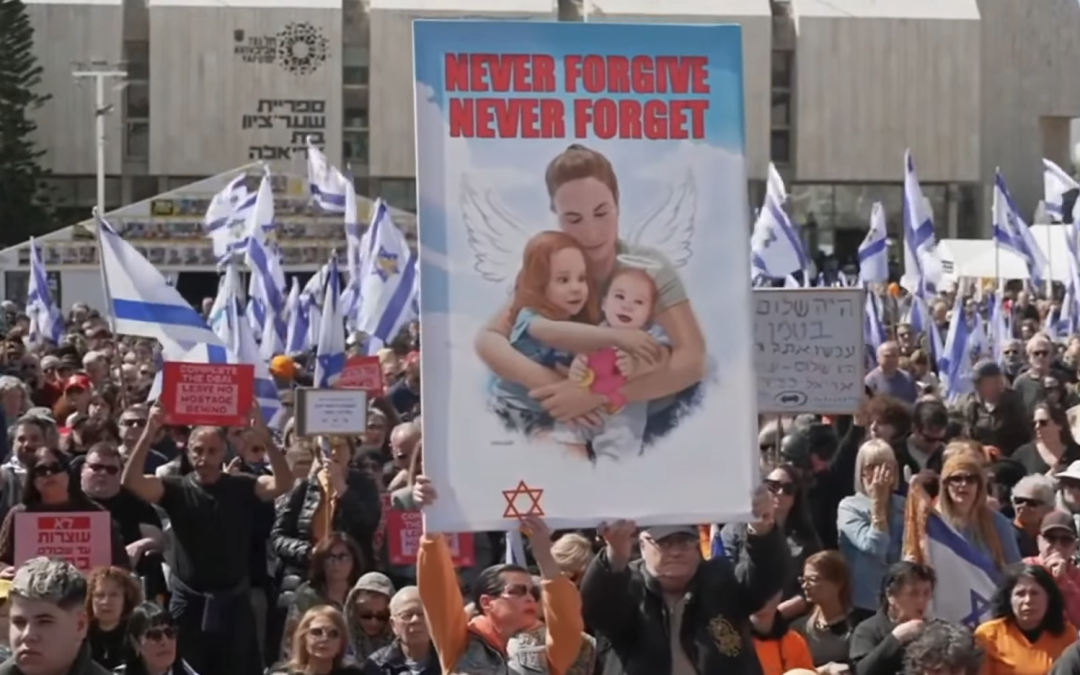
The Funeral of the Bibas Family in Israel: A Nation Mourns Its Lost Innocence
Funeral of the Bibas Family
On February 26, 2025, Israel paused in collective grief as the funeral procession of Shiri Bibas and her two young sons, Ariel and Kfir, wound its way from Rishon Lezion to the Tsoher Cemetery near Kibbutz Nir Oz. The Bibas family—Shiri, 32, Ariel, 4, and Kfir, just shy of 9 months when they were abducted—had become a haunting symbol of the brutality unleashed on October 7, 2023, when Hamas militants stormed southern Israel, killing over 1,200 people and seizing 251 hostages. For 509 days, their fate gripped the nation, their faces—Shiri’s terrified expression clutching her redheaded boys—etched into the public consciousness. The return of their remains last week shattered any lingering hope, and their funeral became a moment of national reckoning, a day when tens of thousands lined highways with Israeli flags and orange balloons to bid farewell to a family that embodied both resilience and unimaginable loss.
The Bibas Family: From Kibbutz Life to Captivity
The Bibas family lived in Kibbutz Nir Oz, a tight-knit community near the Gaza border known for its pastoral charm and peace-loving residents. Shiri, a kindergarten teacher with a warm smile, and her husband Yarden, a 34-year-old welder who loved music and comedy, were raising their two boys in a home filled with laughter—until that fateful morning. On October 7, 2023, as rockets rained down and militants breached the kibbutz, Yarden texted his sister Ofri: “They’re in the house.” His final message, “I love you,” marked the last contact before the family was torn apart.
Security footage later revealed the harrowing scene: Shiri, wrapped in a sheet, clutching Ariel and baby Kfir as armed men surrounded them, her pleas of “Stop, stop” in Hebrew echoing futilely. Yarden was captured separately after reportedly leaving their safe room to divert the attackers, a desperate act to protect his wife and children. The images of Shiri and her boys, their red hair a striking contrast to the chaos, became an indelible marker of the attack’s cruelty, while Yarden’s bloodied face, captured in militant propaganda, underscored the family’s suffering.
For over 16 months, Israel and the world held its breath. The Bibas family—particularly Kfir, the youngest hostage—became a rallying cry. Orange, symbolizing their fiery locks, adorned protests, buildings, and social media campaigns demanding their release. Yet hope dwindled as Hamas claimed in November 2023 that Shiri and her sons had died in an Israeli airstrike, a claim Israel treated with skepticism until forensic evidence confirmed a darker truth: they were brutally murdered by their captors, the boys killed with bare hands in a chilling act of violence.
The Return of the Remains: A Bittersweet Homecoming
Yarden Bibas was released alive on February 1, 2025, as part of a fragile ceasefire deal that saw Hamas free 33 hostages in exchange for 1,900 Palestinian prisoners. His return was bittersweet—he came home without his family, tormented by uncertainty. Then, on February 20, Hamas handed over coffins it claimed contained Shiri, Ariel, and Kfir, alongside the remains of Oded Lifshitz, an 83-year-old peace activist from Nir Oz. The handover in Gaza was grotesque—coffins displayed on a podium with blaring music and images from family photos once used in hostage posters: Ariel in a white polo, Kfir with a pink toy, Shiri radiant before her world collapsed.
Israel’s forensic examination revealed a twist—initially, the female remains were not Shiri’s but an unidentified Palestinian woman’s, prompting accusations of a ceasefire violation. After Hamas delivered the correct body on February 21, DNA confirmed the devastating reality. IDF spokesman Rear Adm. Daniel Hagari announced that Shiri had been “brutally murdered” in November 2023, her sons killed in “cold blood,” their bodies bearing no signs of bombing injuries—contradicting Hamas’s narrative. Yarden, reunited with their remains but not their living presence, faced an unbearable void.
The Funeral of the Bibas Famiy Procession: A Nation United in Sorrow
The Bibas family’s funeral on February 26, 2025, was a private affair at their request, held at Tsoher Cemetery near their shattered Kibbutz Nir Oz. Yet its public resonance was inescapable. The procession began in Rishon Lezion, where mourners gathered outside the funeral home, weeping, holding signs reading “Forgive us,” and softly singing “Hatikvah,” Israel’s national anthem. Black vans with tinted windows carried the coffins southward, passing through junctions where thousands stood in silence, waving Israeli flags as urged by the Hostages Families Forum.
The Eshkol Regional Council had called for residents to line the route from 9:00 a.m., and they responded in droves. Orange balloons floated skyward, a poignant tribute to the “ginger babies” who had united a nation. Along rural highways, smaller groups reached out to touch the vans, connecting with relatives like Shiri’s sister Dana Silberman-Sitton, who grasped hands through an open window. The eulogies, live-streamed from 11:30 a.m., were also screened in Tel Aviv’s “Hostage Square,” reflecting the Bibas family’s status as a collective wound.
Yarden’s words over their graves cut deepest. “I’m sorry I couldn’t protect you all,” he said, his voice breaking. To Shiri, he pleaded, “Guard me so I don’t sink into darkness.” Recalling Kfir’s birth—“Another redhead!” the midwife had exclaimed—he mourned, “You made our family perfect.” To Ariel, he spoke of lessons in life’s priorities, ending with, “People say they’ll be there for me, but they are not you. Stay close.” Ofri Bibas-Levy, his sister, added, “I didn’t hope to see you again like this,” her grief echoing a nation’s.
A National and Global Response
The funeral was more than a farewell—it was a mirror to Israel’s soul. No government officials were invited, a pointed snub reflecting the family’s frustration. Ofri had remarked days earlier, “Prime Minister Netanyahu, we haven’t received an apology in this terrible moment.” The Bibas family’s call for accountability—“This disaster should not have happened; you should have returned alive”—resonated with a public weary of war and loss. Through her car window, Ofri saw “a broken country,” one that “won’t heal until the last hostage is home.”
Globally, the Bibas tragedy struck a chord. Argentina, where Shiri’s father José Luis Silberman hailed from, declared two days of mourning. In Buenos Aires, Jews demonstrated in solidarity. Times Square’s billboards once flashed their faces with “Kidnapped”; now, they mourned in orange. Social media overflowed with tributes—parents posted photos of redheaded children, captioned, “We remember Ariel and Kfir.” The color orange, once a beacon of hope, became a global symbol of shared sorrow.
The Context of October 7 and Its Aftermath
The Bibas family’s story is inseparable from October 7, 2023, when Hamas’s attack plunged Israel into chaos. Nir Oz lost a quarter of its residents—killed or kidnapped—among them Shiri’s parents, José Luis and Margit Silberman, found dead shortly after. The war that followed claimed over 48,000 Palestinian lives, per Gaza’s health ministry, as Israel sought to dismantle Hamas. The Bibas children, especially Kfir, embodied the conflict’s human cost—innocents caught in a cycle of violence.
Their captivity unfolded in fragments: early footage showed them alive in Khan Yunis, handed from Kataib Mujahadin to Hamas. A propaganda video of Yarden sobbing as he learned of their supposed deaths in an airstrike fueled speculation, but Israel’s forensic findings shifted the narrative to deliberate murder. The ceasefire, fragile since January 19, 2025, hinges on further hostage releases by March 8—without them, fighting may resume, leaving 100 captives’ fates uncertain.
Reflections on Resilience and Loss
The Bibas funeral was a Jewish funeral in its rawest form—no talk of heaven, just a focus on memory and goodbye, as philosopher Marcel-Jacques Dubois once noted. Israelis lined the streets not for closure but to share sorrow, a gift to the family and themselves. In contrast, Hamas’s handover ceremony—children celebrating near coffins—highlighted a moral chasm, amplifying Israel’s anguish.
For Yarden, survival is a heavy burden. Released yet incomplete, he faces survivor’s guilt, a sentiment Dr. Rachel Yehuda called “unbearable” in such cases. The Bibas family’s home in Nir Oz remains unrebuilt, a physical echo of his fractured life. Their story, Ofri insisted, must not fade—it’s a call to ensure no family endures such torment again.
The Legacy of the Bibas Family
As the procession ended and the cemetery gates closed, the Bibas family joined Shiri’s parents in Tsoher’s soil, near the kibbutz they once called home. Their legacy is twofold: a symbol of Israel’s pain and a summons to action. Orange ribbons persist, urging the return of the remaining hostages. Buildings glow in their honor, a reminder of innocence lost.
The funeral of the Bibas Family, Shiri, Ariel, and Kfir Bibas was not just a burial—it was a nation confronting its vulnerability, its strength, and its unresolved wounds. As Yarden whispered his farewells, Israel vowed to remember, to heal, and to fight on, ensuring their names—Shiri, Ariel, Kfir—endure beyond the silence of their graves.
The funurel of the Bibas family will always be with us!