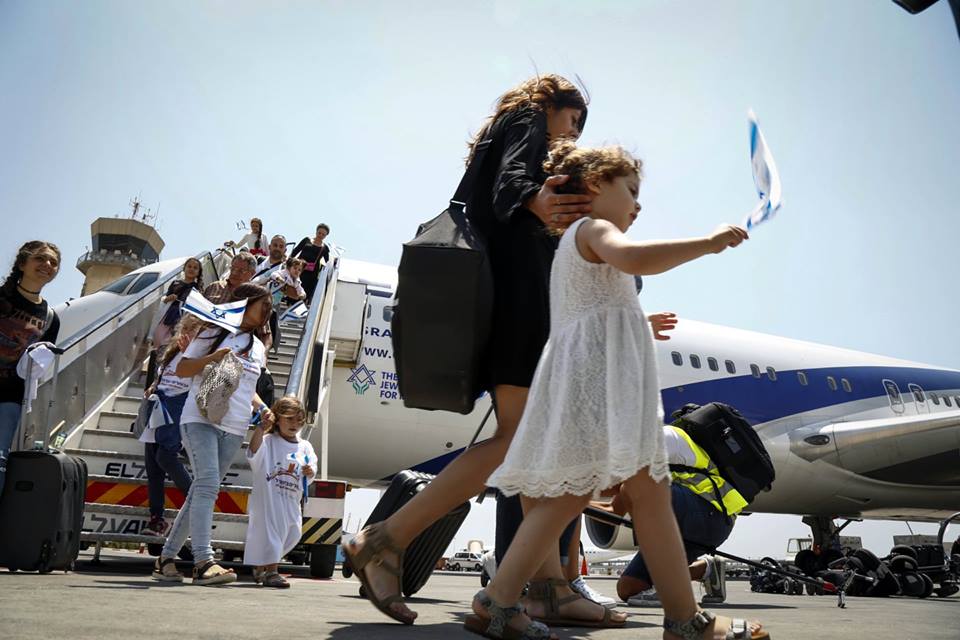
Aliyah from Europe: A Journey of Return, Resilience, and Redemption
 The term “Aliyah,” which means “ascent” in Hebrew, symbolizes the spiritual and physical journey of Jews returning to their ancestral homeland in Israel. Aliyah from Europe has been a defining phenomenon in Jewish history, shaping the modern State of Israel and reflecting the complex interplay of persecution, Zionism, and hope. For centuries, particularly since the 19th century, Jews from across Europe have embarked on this migration, motivated by a mixture of ideological fervor, religious yearning, and an urgent need to escape oppression. This essay explores the history, motivations, and consequences of Aliyah from Europe, tracing its evolution through pivotal moments and highlighting its enduring legacy. It underscores the profound significance of making Aliyah for individuals, Jewish communities, and the broader Jewish nation.
Early Waves of Aliyah from Europe
The roots of Aliyah from Europe go back long before the establishment of modern Israel in 1948. In the Middle Ages, small groups of European Jews journeyed to the Land of Israel, then part of the Ottoman Empire, driven by religious devotion. These early migrations were often individual or familial, undertaken by scholars, mystics, or those seeking to spend their final days in Jerusalem. However, it wasn’t until the 19th century that Aliyah from Europe began to take on a more organized and ideological character. The First Aliyah (1882–1903), predominantly composed of Jews from Eastern Europe, marked the beginning of modern Aliyah from Europe. Fleeing pogroms in the Russian Empire and inspired by the emerging Zionist movement, approximately 25,000 to 35,000 Jews left countries such as Russia, Romania, and Poland. They established agricultural settlements like Rishon LeZion and Petah Tikva, laying the foundation for a Jewish national home. This wave of Aliyah was driven by both desperation and aspiration—an urgent desire to escape anti-Semitic violence and the hope to build a new life anchored in Zionist ideals.
The Second Aliyah (1904–1914) further solidified the trend of Aliyah from Europe. During this period, around 40,000 Jews, again mostly from Eastern Europe, arrived in Ottoman Palestine. Influenced by socialist Zionism, these immigrants founded kibbutzim—collective farming communities—and prioritized Hebrew culture and self-reliance. Notable figures like David Ben-Gurion, who would later become Israel’s first prime minister, emerged from this wave of Aliyah. Their vision extended beyond mere escape from persecution; it focused on the creation of a new Jewish society, distinct from the experience of the diaspora.
The Interwar Period and Rising Tensions
The years between World War I and World War II witnessed an intensified Aliyah from Europe as conditions for Jews deteriorated across the continent. The Third Aliyah (1919–1923) saw the arrival of approximately 35,000 Jews, predominantly from Poland and Russia, driven by post-war chaos, anti-Semitic violence, and the Balfour Declaration of 1917, which endorsed a Jewish homeland in Palestine. This wave of Aliyah was characterized by a pioneering spirit, as immigrants established agricultural settlements and urban centers like Tel Aviv.
The Fourth Aliyah (1924–1929) marked a demographic shift, welcoming around 67,000 more middle-class Jews from Poland. Economic instability and rising nationalism in Europe prompted these immigrants to seek stability in Palestine. However, British restrictions imposed under the Mandate began to limit Aliyah, creating tensions between Zionist aspirations and colonial policies.
The Fifth Aliyah (1929–1939) emerged as the most dramatic pre-war wave, with the rise of Nazism in Germany and escalating anti-Semitism throughout Eastern Europe forcing over 250,000 Jews to flee to Palestine. This period saw a significant influx of professionals, intellectuals, and urban dwellers, which transformed the cultural and economic landscape of the Yishuv (the Jewish community in Palestine). Cities such as Haifa and Jerusalem experienced rapid growth, and Hebrew blossomed into a vibrant, living language. Yet, British quotas outlined in the 1939 White Paper severely restricted Aliyah when it was urgently needed, leaving millions trapped under Nazi rule.
Aliyah from Europe During and After the Holocaust
The Holocaust (1939–1945) was a catastrophic turning point for Aliyah from Europe. As Nazi Germany systematically murdered six million Jews, legal immigration to Palestine was severely restricted by British policies. Nevertheless, “Aliyah Bet”—the illegal immigration of Jews—became a lifeline for thousands. Courageous organizers, often survivors themselves, smuggled Jews out of Europe on rickety ships, defying both Nazi persecution and British naval blockades. The story of the Exodus 1947, a ship carrying over 4,500 Holocaust survivors that was turned back by the British, emerged as a powerful symbol of the struggle for Aliyah from Europe during this dark period.
After World War II, the survivors of the Holocaust ignited a massive wave of Aliyah from Europe. Between 1945 and 1948, tens of thousands of displaced persons from camps across Europe—Poland, Germany, Romania, and beyond—risked everything to reach Palestine, often illegally. The sheer scale of suffering and the dawning realization that Europe could no longer be a safe haven for Jews galvanized international support for a Jewish state. When Israel declared independence in May 1948, the tide of Aliyah from Europe surged as borders opened to those who had endured unimaginable loss.
Post-1948: A New Chapter for Aliyah from Europe
The establishment of Israel heralded a new era of Aliyah from Europe. During the late 1940s and 1950s, the nascent state welcomed hundreds of thousands of European Jews, many of whom were Holocaust survivors or refugees escaping the Soviet-controlled Eastern Europe. Countries such as Romania, Hungary, and Poland experienced significant outflows as Jews sought to rebuild their lives in Israel. The Israeli government actively promoted this migration through the Law of Return (1950), which granted every Jew the right to settle in Israel and obtain citizenship.
The Cold War era introduced another dimension to Aliyah from Europe. Soviet Jews, subjected to state-sponsored anti-Semitism and restricted religious practices, began to advocate for the right to emigrate. While not all Soviet Jews resided in geographically European regions, many originated from the western parts of the USSR, including Ukraine, Belarus, and the Baltic states—areas with deep historical ties to European Jewish life. The “Let My People Go” movement in the 1960s and 1970s culminated in a dramatic surge of Aliyah from Europe following the Soviet Union’s relaxation of emigration policies in the late 1980s. Between 1989 and 2006, over one million Jews and their relatives from the former Soviet Union arrived in Israel, significantly reshaping its demographic and cultural landscape.
The Importance of Making Aliyah from Europe
The significance of making Aliyah from Europe cannot be overstated; it is a cornerstone of Jewish survival, identity, and destiny. Historically, Aliyah from Europe has provided a pathway to safety and renewal in the face of relentless persecution. The pogroms of the 19th century, the Holocaust of the 20th century, and the resurgence of anti-Semitism in the 21st century have all highlighted the precariousness of Jewish life in Europe. Making Aliyah has been, and continues to be, a means of escaping existential threats, allowing Jews to reclaim agency over their lives in a land where they are part of a sovereign majority rather than a vulnerable minority.
Beyond individual salvation, the importance of making Aliyah from Europe lies in its role in preserving Jewish continuity. Europe was once the epicenter of Jewish civilization, home to thriving communities that made unparalleled contributions to theology, philosophy, science, and the arts. However, centuries of expulsion, ghettoization, and genocide have decimated these communities. By making Aliyah, Jews have ensured that the cultural and intellectual legacy of European Jewry—its languages, traditions, and resilience—continues to thrive in Israel. The revival of Hebrew, for instance, owes much to European immigrants who transformed a liturgical language into a modern, dynamic tongue.
For the State of Israel, the significance of making Aliyah from Europe is foundational. The early waves of European immigrants built the infrastructure of the nation—its settlements, cities, and institutions. Without Aliyah, Israel might not have achieved the critical mass of population and expertise necessary to declare independence in 1948. The engineers, doctors, and educators who arrived from Europe during the pre- and post-statehood years were instrumental in transforming a fledgling nation into a regional powerhouse. Today, the ongoing importance of making Aliyah from Europe is evident in the contributions of French, British, and Ukrainian Jews, who inject skills and vitality into Israel’s economy and society.
The spiritual dimension of making Aliyah from Europe is equally profound. For religious Jews, living in Israel fulfills a divine commandment tied to the sanctity of the Land of Israel. Ascending to Zion is viewed as a return to the source of Jewish spirituality, a rejection of exile (galut), and an embrace of redemption (geulah). Even for secular Jews, Aliyah from Europe carries transcendent significance—an affirmation of Jewish peoplehood and a steadfast refusal to allow history’s tragedies to define the future.
Strengthening Jewish Identity Through Aliyah from Europe
The significance of making Aliyah from Europe extends beyond personal choice; it plays a crucial role in reinforcing Jewish identity amidst widespread assimilation and disconnection. Across Europe, Jewish communities are experiencing dwindling numbers as younger generations move away from religious and cultural practices, often intermarrying or severing ties with their heritage. By making Aliyah, individuals reconnect with a vibrant Jewish civilization where holidays, language, and history are seamlessly integrated into everyday life. This revitalization benefits not only the individual but also the community, as each new immigrant strengthens the collective Jewish presence in Israel.
Furthermore, Aliyah from Europe acts as a safeguard against the psychological toll of anti-Semitism. In countries like France, where Jews have endured violent attacks and social ostracism, remaining can undermine a sense of belonging and security. Making Aliyah presents a transformative alternative: instead of living in fear or concealing their identity, Jews can move to a nation designed for their protection and flourishing. This transition from victimhood to empowerment is a critical reason why Aliyah from Europe remains essential today.
A Global Jewish Responsibility
The significance of making Aliyah from Europe goes beyond the individual and the state; it resonates deeply within the global Jewish diaspora. Israel’s role as a Jewish homeland depends on its capacity to absorb and integrate Jews from across the globe, especially from Europe, where Jewish communities have historically faced great peril. By advocating for and facilitating Aliyah, the Jewish people honor a shared commitment to offer refuge to those in need while simultaneously reinforcing the homeland that nurtures them all.
The mass migration of Soviet Jews in the 1990s serves as a poignant example; it not only salvaged the lives of countless families but also enriched Israel, making it a more diverse and resilient nation. This responsibility is reciprocal. Israel’s thriving as a democratic and innovative state enhances the pride and security of Jews in Europe, who view it as a protector of their existence. Therefore, the importance of making Aliyah from Europe is twofold: it rescues individuals from imminent danger and bolsters the collective Jewish future.
Challenges and the Call to Action
Making Aliyah from Europe, despite its significance, presents numerous challenges. Economic uncertainty, language barriers, and cultural adjustments can deter potential immigrants. European Jews may find themselves torn between their ancestral homes and the allure of Israel, particularly in stable countries like the UK or Germany. However, these obstacles pale in comparison to the historical ramifications of inaction. The lessons of the Holocaust serve as a stark reminder that restricted Aliyah left millions without a means of escape, demonstrating that hesitation can have dire consequences.
Today, organizations such as the Jewish Agency and Nefesh B’Nefesh highlight the importance of making Aliyah from Europe by providing financial assistance, job placement services, and community support. Governments also play a crucial role—Israel’s open-door policy stands in stark contrast to Europe’s often ambivalent attitude towards its Jewish citizens.
The message is urgent: for Jews in Europe facing uncertainty, making Aliyah is not merely an option; it is a vital lifeline.
Aliyah from Europe in the Modern Era
In the 21st century, Aliyah from Europe continues to flourish, fueled by both crisis and opportunity. France, which is home to Europe’s largest Jewish community, has witnessed over 40,000 Jews making Aliyah since 2014, largely in response to rising anti-Semitic incidents. Meanwhile, smaller yet significant numbers from Ukraine, Russia, and the UK showcase a complex interplay of push factors, such as conflict and instability, alongside pull factors, including Israel’s robust economy. The significance of making Aliyah from Europe today lies in its adaptability, addressing the aspirations of a new generation in search of purpose and belonging.
Conclusion
Aliyah from Europe embodies a powerful narrative of resilience, transformation, and the profound connection between a people and their homeland. From the pioneers fleeing pogroms during the First Aliyah to the Soviet refuseniks and contemporary French émigrés, European Jews have indelibly shaped the destiny of Israel through their courage and contributions. The significance of making Aliyah from Europe transcends mere migration; it saves lives, preserves cultural heritage, fosters nation-building, and revitalizes Jewish identity. As of March 12, 2025, this journey remains a resounding call to action—a testament to the unbreakable spirit of a people determined to rise, not just for themselves, but for the future of the entire Jewish community.