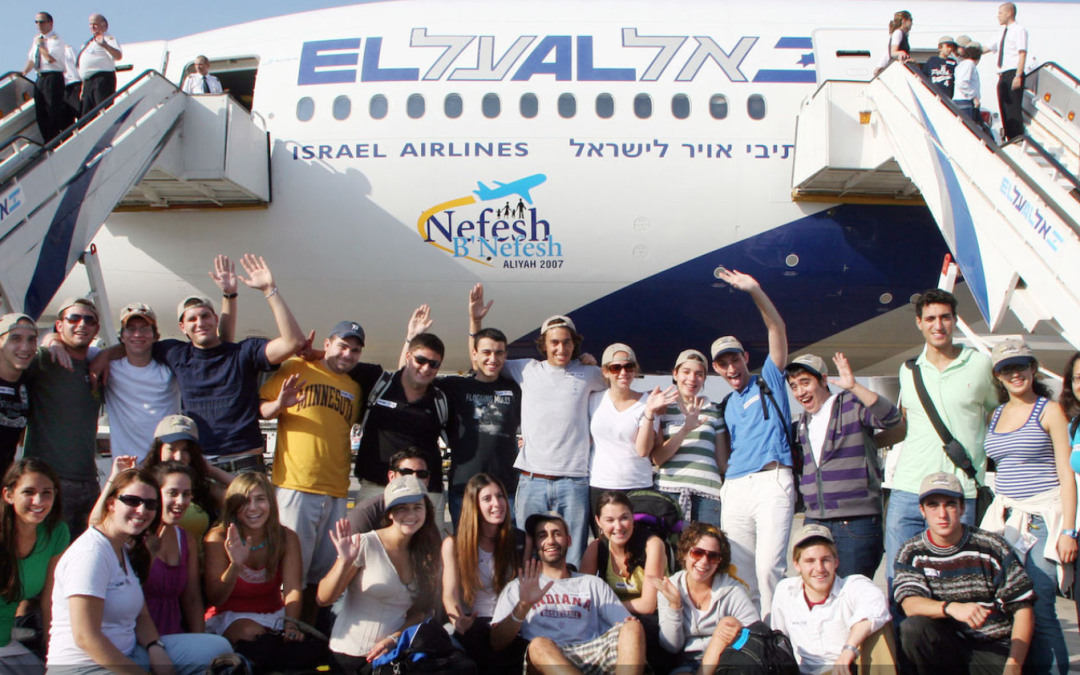
Aliyah from North America: A Journey of Identity, Zionism, and New Beginnings
 The term “Aliyah” in Hebrew means “to rise,” a concept that holds important meaning for the Jewish people. In the modern context, Aliyah refers to the immigration of Jews from the diaspora to Israel, a movement rooted in the Zionist vision of returning to the ancestral homeland. Among the many waves of Aliyah from across the globe, Aliyah from North America stands out as a unique phenomenon. Unlike Jewish immigration from areas with persecution or economic problems, Aliyah from North America, mainly the U.S, and Canada, is often motivated by ideology, faith, and a desire for a stronger Jewish identity. This 4000-word article explores the history and reasons behind Aliyah from North America, the challenges faced, key figures involved, and its economic and social impacts, as well as recent trends. It highlights why many North American Jews decide to make Israel their home.
Historical Context: The Beginnings of Aliyah from North America
The story of Aliyah from North America begins long before the establishment of the State of Israel in 1948. In the late 19th and early 20th centuries, during the First and Second Aliyot (1881–1914), a small number of North American Jews migrated to Ottoman Palestine with Eastern European Jews. These early pioneers were often motivated by Zionist ideals, promoted by leaders like Theodor Herzl, aimed to establish a Jewish homeland to address centuries of persecution. However, the magnitude of Aliyah from… North America saw only a small number of Jewish immigrants compared to the mass emigration from Europe, where pogroms and economic hardship drove millions to seek new lives, especially in the United States. 1948, thousands of American Jews migrated to Mandate Palestine, motivated by religious beliefs and the opportunity to establish a Jewish homeland. future. However, the numbers were low, and many people returned to North America because the region’s harsh conditions provided limited economic opportunities compared to the thriving industrial cities in the United States. From Israel’s founding in 1948 through the 1960s, Aliyah from North America remained a trickle. Between 1948 and the Six-Day War in 1967, immigration from the United States and Canada was notably low, with many of those who did make Aliyah returning home. In 1959, it was estimated that out of 35,000 American and Canadian Jews who immigrated to Israel, only about 6,000 stayed, highlighting the difficulties of adjusting to life in a new country.
The Six-Day War in 1967 marked a turning point. Israel’s swift victory and the unification of Jerusalem sparked a surge of pride and Zionist enthusiasm among North American Jews. For the first time, Aliyah from North America increased significantly, as excitement inspired a generation to view Israel as a vibrant, achievable homeland rather than just a distant dream. This period laid the groundwork for a more sustained flow of immigration, though it would take decades and organizational support to transform Aliyah from North America into a significant movement.
Motivations: Why North American Jews Make Aliyah
- While Jews from places like the former Soviet Union and Arab countries often left due to danger, North American Jews mostly chose to make Aliyah. Since the late 19th century, North America, especially the United States and Canada, has provided Jews with remarkable freedom, prosperity, and safety.So why do thousands of North American Jews leave behind comfortable lives to start anew in Israel? The answer lies in a complex interplay of ideological, religious, and personal factors. Zionism and Jewish Identity: The core of Aliyah from North America is the belief that Jews should live in their ancestral homeland. For many, moving to Israel is the ultimate expression of Jewish identity, a way to live fully immersed in a Jewish majority culture. The sentiment is often heightened by a desire to support the Jewish state, particularly during crises. Example. Posts on X from early 2025 show increasing Zionist enthusiasm, highlighted by the North America Aliyah tour that connects thousands to opportunities in Israel and fosters solidarity with the Jewish homeland.
- Religious Fulfillment: For religious Jews, Aliyah is often seen as a mitzvah—a commandment rooted in Jewish tradition. Many Jewish scholars believe that living in Israel is an important religious obligation. Many observant North American Jews are drawn to Israel by the opportunity to observe land-related mitzvot, like the Sabbatical year (shmita).
- Community and Belonging: North American Jews often cite a longing for a deeper sense of community as a motivator. In Israel, Jewish holidays are national events, Hebrew is the everyday language, and Jewish culture permeates every aspect of life. This contrasts with the diaspora experience, where Jews are a minority and must navigate a secular or multi-faith society.
- Despite North America’s history as a safe place for Jews, recent increases in antisemitism have led some to reevaluate their future. The aftermath of events like the October 7, 2023, Hamas attack on Israel and the subsequent surge in anti-Jewish sentiment in the West have led some to view Aliyah as a response to insecurity. However, data from 2023 suggests that antisemitism remains a marginal factor for most North American olim (immigrants), with Zionism cited as the primary driver by over half of applicants.
- Organizations like Nefesh B’Nefesh, established in 2002, help eliminate financial and logistical challenges, making Aliyah easier. They’ve attracted professionals like doctors, nurses, and engineers to Israel by offering grants, career guidance, and simplifying bureaucracy, allowing them to pursue meaningful careers and personal dreams.
The Role of Nefesh B’Nefesh: A Game Changer
No discussion of Aliyah from North America is complete without mentioning Nefesh B’Nefesh, a nonprofit that has transformed the process since it began. Nefesh B’Nefesh, in collaboration with the Jewish Agency for Israel and the Israeli government, has helped over 75,000 North American Jews immigrate to Israel by 2022, with that number continuing to rise. Chartered flights, celebratory arrivals, and comprehensive support—from job placement to community integration—have turned Aliyah into a structured, accessible journey.
during the economic downturn in the U.S. nudged some to explore life in Israel. More recently, the organization reported that 2,000 North Americans made Aliyah in the summer of 2024 alone, despite regional conflicts, reflecting a resilience and commitment that defies external challenges. The 2025 North America Aliyah tour, which attracted over 2,000 participants, highlights its role in connecting potential olim with resources and inspiration.
Challenges of Aliyah from North America
While the motivations are compelling, Aliyah from North America is not without its hurdles. The transition from a prosperous, English-speaking society to Israel’s Hebrew-centric, often chaotic reality can be daunting.
- Cultural Adjustment: North American Jews often face culture shock in Israel, where directness replaces politeness, and bureaucracy can be maddening. Learning Hebrew, a necessity for full integration, poses a significant barrier, especially for older immigrants.
- Israel’s cost of living, especially in cities like Jerusalem and Tel Aviv, is high, and salaries often do not align with North American levels. While Nefesh B’Nefesh provides financial aid, many olim must downsize their lifestyles or rely on savings.
- Living in a conflict zone, whether due to rocket fire from Gaza or northern tensions, demands a psychological adjustment that not everyone can handle. Many North American olim choose to stay, feeling a responsibility to support Israel during difficult times.
- Family Ties: Leaving behind relatives, friends, and established communities in North America is a wrenching decision. For some, the distance strains relationships, though modern technology helps bridge the gap.
Modern Trends: Aliyah in the 21st Century
Today, Aliyah from North America is a diverse and dynamic movement. By 2025, over 200,000 North American immigrants live in Israel, a figure that has grown steadily since 1948. In 2021, 4,478 North Americans made Aliyah, accounting for 16% of Israel’s total immigration that year. In 2023, during the Iron Swords war, 720 North Americans arrived, with 200 arriving in the last week of the year—a 142% increase in applications from 2022.
The demographics of these olim are truly remarkable. They include people of all ages, from infants to a 97-year-old, who arrived in 2024, coming from states like New York, New Jersey, and California, and settling in cities such as Jerusalem, Beit Shemesh, and Ra’anana. The diversity of professions is evident, with 65 doctors and 28 nurses arriving in Israel in 2023 alone, underscoring the country’s allure for skilled workers. Programs like the FIDF-Nefesh B’Nefesh Lone Soldiers initiative also draw young adults, with 231 serving in the IDF in 2023.
The COVID-19 pandemic briefly slowed Aliyah, but the rebound has been robust. In 2025, events like the North America Aliyah tour signal a new wave of interest, fueled by a mix of Zionist zeal and global uncertainty. Posts on X from March 11, 2025, highlight over 2,000 attendees at Aliyah fairs, where music and discussions connected dreams to reality.
Personal Stories: The Human Face of Aliyah
Behind the statistics are countless stories of transformation. Take Zehava Stemp, who arrived in 2022 with her husband and five children on a Nefesh B’Nefesh flight. Wearing matching “Stemp Aliyah 2022” T-shirts, she tearfully described it as “living the dream.” Alvin Reinstein and Esther Lauder, a couple in their 70s, brought a historic Torah scroll from New Jersey to Efrat to honor their parents who survived the Holocaust. These narratives reflect the emotional depth of Aliyah from North America—a journey that blends past, present, and future.
Expanding the Narrative: A Deeper Dive into Aliyah from North America
Historical Waves: Beyond the Six-Day War
While the Six-Day War catalyzed a shift, other historical moments have shaped Aliyah from North America. The Yom Kippur War of 1973 was a significant conflict that motivated North American Jews to unite in support of Israel. In the 1980s, the Ethiopian Aliyah gained attention, while North American Jews also increased their numbers, with 1,000 to 2,000 arriving each year. The Oslo Accords of the 1990s sparked hope for peace, drawing in idealistic families. Despite the challenges of the Second Intifada from 2000 to 2005, many chose to remain.
The 21st century introduced new dynamics. The 2008 financial crisis led some to seek stability in Israel, and the 2014 Gaza conflict increased the number of volunteers and immigrants, showing that adversity can strengthen commitment. By 2025, the cumulative effect of these waves has built a robust North American presence in Israel, with communities like Ra’anana and Modi’in often dubbed “Little America” for their English-speaking enclaves.
Notable Figures: Pioneers of Aliyah from North America
Aliyah from North America has produced influential figures who embody its spirit. Golda Meir, born in Kyiv but raised in Milwaukee, made Aliyah in 1921 and became Israel’s fourth prime minister (1969–1974). Her journey from the American Midwest to leading a nation symbolizes the potential impact of North American olim. Rabbi Shlomo Riskin moved from New York to Efrat in 1983 and turned the settlement into a center for religious Zionism, drawing in many North Americans. Joshua Matz, a Silicon Valley tech entrepreneur, made aliyah in 2020 and started a company in Tel Aviv, highlighting North American innovation’s impact on Israel’s economy.
These individuals showcase the diverse contributions of North American aliyah across politics, religion, and industry, especially considering their small numbers.
Economic and Social Impacts: North Americans in Israel
North American olim have left a distinct mark on Israel. Their skills significantly enhance vital sectors of the economy. In 2023, the influx of 65 doctors and 28 nurses addressed healthcare shortages, while engineers and tech professionals fuel Israel’s “Startup Nation” reputation. A 2024 Nefesh B’Nefesh report found that North American immigrants contribute billions to Israel’s GDP each year through entrepreneurship and skilled jobs.
Socially, they’ve shaped Israeli culture. English-speaking schools like the Walworth Barbour American International School in Israel cater to their children, while synagogues like Kehilat Nitzan in Jerusalem blend American-style worship with Israeli vibrancy. Communities in Beit Shemesh and Efrat reflect North American suburban life, featuring baseball leagues and Thanksgiving dinners, while also blending into Israeli culture. Many second-generation olim are more fluent in Hebrew than their parents.
Nevertheless, this influence comes with its share of tension. Some Israelis view North American enclaves as insular, resisting full assimilation. The high cost of supporting olim through tax incentives and grants is debated, but studies indicate their long-term economic contributions exceed initial costs.
Criticisms and Controversies: A Balanced View
Aliyah from North America has sparked mixed reactions. Critics in Israel claim that North American immigrants, who typically have more resources and education, receive more aid than immigrants from poorer areas. The phenomenon known as the “Anglo bubble,” where English-speaking immigrants congregate in certain neighborhoods, can create an impression of elitism or a disconnect from the wider Israeli community.
From a North American perspective, some Jewish leaders worry that Aliyah depletes diaspora communities, weakening their political and cultural clout. Others question the ethics of leaving a stable democracy for a conflict zone, especially given Israel’s complex relationship with Palestinians—a topic that occasionally surfaces in X debates about Aliyah’s moral implications.
Within the olim community, “yerida” (emigration from Israel) remains a sensitive issue. Despite Nefesh B’Nefesh claiming success, about 20–30% of North American immigrants return within ten years due to economic difficulties or cultural challenges. This “revolving door” phenomenon challenges the narrative of Aliyah as a permanent ascent.
The Future of Aliyah from North America: Trends and Predictions
As of March 12, 2025, the future of Aliyah from North America is a blend of promise and uncertainty. Rising antisemitism in the West, shown by synagogue attacks and campus protests, contributed to a 142% increase in applications in 2023. Israel’s tech growth and remote work options may appeal to young emigrants, while climate issues like California wildfires might push others to move east.
Nefesh B’Nefesh is at the forefront of innovation, spearheading virtual Aliyah fairs and utilizing AI for efficient job matching. Yet, challenges loom: Israel’s housing crisis, political polarization, and security threats could deter hesitant families. The 2025 North America Aliyah tour’s success—2,000+ attendees—suggests momentum, but sustaining it requires addressing these hurdles.
The demographic profile of olim is likely to undergo changes. Older retirees, drawn by Israel’s healthcare and community, are rising, while lone soldiers and gap-year students fuel youth Aliyah. Hybrid models—splitting time between Israel and North America—may also emerge, reflecting global mobility trends.
Voices of Tomorrow: What Olim Say
Insights from interviews on X and Nefesh B’Nefesh forums highlight a blend of hope and pragmatism. Sarah Cohen, a 2024 oleh from Toronto, writes, “Israel’s chaos is my chaos now—it’s home.” David Klein, a Boston native in Haifa, adds, “Aliyah isn’t escape; it’s purpose.” These voices echo a sentiment that Aliyah from North America, despite its complexities, remains a vibrant, evolving journey.
Conclusion: A Tapestry of Ascent
Aliyah from North America weaves a rich tapestry—historical resilience, personal sacrifice, and collective ambition. From Golda Meir’s leadership to a 97-year-old’s 2024 arrival, it’s a story of ascent in every sense. As Israel and the diaspora face uncertainty, the movement persists, showing that the call of Zion connects people across oceans and generations. North American olim are not just relocating; they are creating a future, one family at a time, motivated by faith, identity, or destiny.