The 1,000-Year Jewish Presence in Hebron
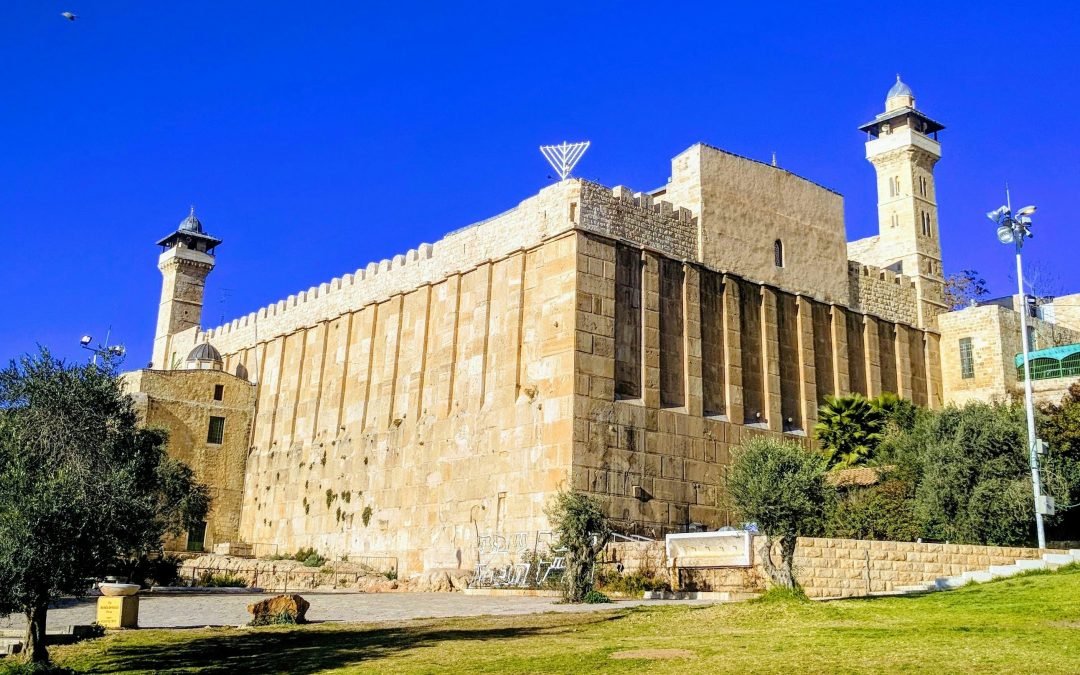
 Hebron, one of the oldest continuously inhabited cities in the world, stands as a timeless monument to Jewish history, faith, and perseverance. Nestled in the Judean Hills, this ancient city is revered as the resting place of the biblical Patriarchs and Matriarchs—Abraham, Isaac, Jacob, Sarah, Rebecca, and Leah—buried in the Cave of the Patriarchs (Ma’arat HaMachpelah). For over 3,000 years, Hebron has been a spiritual and cultural anchor for the Jewish people, its significance woven into the fabric of their identity. Despite centuries marked by exile, persecution, and upheaval, Jews have maintained a near-continuous presence in Hebron for much of the past millennium, a testament to their enduring connection to this sacred ground.
Hevron’s story is one of resilience, faith, and renewal. From its biblical origins to its modern-day complexities, the city has witnessed the ebb and flow of Jewish life, shaped by both triumph and tragedy. Today, it remains a symbol of heritage and a focal point of contention, yet its Jewish community persists, drawing strength from a legacy that stretches back thousands of years. This article explores Hebron’s rich Jewish history, tracing its evolution across millennia and highlighting its significance in the broader context of Jewish communities in the region, such as those in Har Hevron, including the notable settlement of Maon.
Biblical and Ancient Roots
Hevron’s Jewish story begins in the pages of the Hebrew Bible, specifically in Genesis 23, where Abraham purchases the Cave of the Patriarchs from Ephron the Hittite as a burial site for his wife Sarah. This transaction, detailed with remarkable precision in the text, marks the first recorded Jewish land acquisition in the Land of Israel, establishing Hebron as a spiritual cornerstone. The cave later became the final resting place for Abraham himself, as well as Isaac, Rebecca, Jacob, and Leah, cementing its status as a holy site for Jews and, later, Christians and Muslims who also revere these figures.
During the period of the Israelite kingdoms, Hebron flourished as a significant city. It was here that King David was anointed and ruled for seven years before moving his capital to Jerusalem (2 Samuel 2:1–11). Archaeological evidence, including pottery and structures from the Iron Age, supports Hebron’s prominence during the First Temple period (circa 1200–586 BCE). Even after the Babylonian exile, Jews returned to the region, maintaining a presence through the Second Temple era (516 BCE–70 CE). The city’s strategic location in the Judean Hills, fertile soil, and proximity to trade routes made it a hub of activity, while its religious importance drew pilgrims and settlers alike.
The Roman conquest and the destruction of the Second Temple in 70 CE disrupted Jewish life across Judea, but Hebron remained a touchstone. Scattered Jewish communities persisted, their connection to the Cave of the Patriarchs undiminished. By late antiquity, as the region transitioned under Byzantine rule, Hebron’s Jewish population adapted to shifting powers, laying the groundwork for a presence that would endure through the centuries.
Medieval Jewish Community
The arrival of Islamic rule in the 7th century brought new dynamics to Hevron, yet the Jewish community continued to thrive. Under the Umayyad and Abbasid caliphates (7th–11th centuries), Jews in Hebron engaged in trade, agriculture, and religious scholarship, benefiting from the relative tolerance of early Islamic governance. The Cairo Geniza, a trove of medieval Jewish documents discovered in Egypt, offers a window into this period. Letters and records from the 10th to 13th centuries reveal an active Jewish presence in Hebron, with merchants and scholars corresponding with counterparts in Cairo, Damascus, and beyond. These documents mention synagogues, communal leaders, and even disputes over property—everyday details that paint a picture of a vibrant, self-sustaining community.
The Crusader period (1099–1291) introduced challenges, as Christian rulers imposed restrictions on Jewish life, but Hebron’s Jews persevered, often living alongside Muslim neighbors. Under Mamluk rule (13th–16th centuries), the Jewish community faced further limitations, notably a ban on entering the Cave of the Patriarchs. The site, converted into a mosque, became off-limits to Jews, who were relegated to praying at its outer steps—a practice that persisted for centuries. Despite this, pilgrimage to Hebron remained a cherished tradition, with travelers braving long journeys to connect with their ancestral heritage. Medieval Jewish chroniclers, such as Benjamin of Tudela (12th century), documented these visits, noting Hebron’s enduring pull despite the hardships.
Life under the Mamluks was modest but resilient. Jews in Hebron worked as artisans, traders, and farmers, cultivating olives and grapes in the surrounding hills. Their numbers fluctuated, but their presence never fully vanished, sustained by a deep-rooted belief in the city’s sanctity. This period set the stage for a revitalization under Ottoman rule, when Hebron’s Jewish community would experience a significant renaissance.
Ottoman Era (1517–1917)
The Ottoman conquest of the Levant in 1517 ushered in a golden age for Hevron’s Jews. The empire’s relatively permissive policies toward religious minorities allowed Jewish life to flourish. Sephardic Jews, fleeing the Spanish Inquisition of 1492 and subsequent expulsions, found refuge in Ottoman territories, including Hebron. These newcomers brought with them a rich tradition of scholarship and commerce, revitalizing the city’s Jewish quarter. By the 16th century, Hebron had become a thriving center of Jewish learning, with yeshivot (religious schools) and synagogues springing up to serve a growing population.
One of the most enduring legacies of this era is the Avraham Avinu Synagogue, constructed in 1540 by Sephardic exiles. Named after Abraham, the “father of many nations,” the synagogue became the heart of Hebron’s Jewish community, a place of prayer, study, and communal gathering. Its architecture—simple yet sturdy, with thick stone walls—reflected the practical needs of the time, while its spiritual significance endures to this day. Another towering figure from this period is Rabbi Eliyahu de Vidas, a 16th-century Kabbalist who settled in Hebron and authored Reshit Chochma (“The Beginning of Wisdom”), a seminal work of Jewish mysticism that remains influential in religious circles.
By the 19th century, Hevron’s Jewish population had diversified, with Ashkenazi Jews from Eastern Europe joining their Sephardic brethren. The community numbered in the hundreds, supporting a network of institutions—synagogues, schools, and even a small printing press for religious texts. Jews worked as merchants, tailors, and shoemakers, trading with Arab neighbors in the bustling Hebron market. The Ottoman authorities, while not always benevolent, provided a stable framework that allowed this coexistence to thrive. Travelers’ accounts from the period, such as those of Rabbi Moshe Basola (1522) and later European visitors, describe a bustling Jewish quarter filled with the sounds of prayer and the scent of freshly baked bread.
Yet, beneath this prosperity, tensions simmered. The late 19th century saw the rise of nationalist movements across the Ottoman Empire, and Hebron was not immune. As Zionist ideals began to take root, some Jews in Hebron embraced the dream of a Jewish homeland, while others clung to traditional life. This duality would shape the community’s fate as the 20th century dawned.
The 1929 Hebron Massacre and Aftermath
The early 20th century brought seismic shifts to Hebron. Under British Mandate rule (1917–1948), rising Arab-Jewish tensions, fueled by competing national aspirations, erupted into violence. The most devastating blow came on August 23–24, 1929, when Arab rioters, incited by rumors of Jewish attacks on Muslim holy sites, stormed Hebron’s Jewish quarter. The massacre was brutal: 67 Jews were killed—men, women, and children—while homes and synagogues were looted and burned. Survivors recounted horrific scenes of neighbors turned assailants, though some Arab families risked their lives to shelter Jews, a glimmer of humanity amid the chaos.
The British authorities, overwhelmed and criticized for their inaction, evacuated the remaining Jews, effectively ending a centuries-long continuous presence. The Avraham Avinu Synagogue fell into disrepair, and Hebron’s Jewish quarter lay abandoned. In 1931, a small group of families bravely returned, hoping to rebuild, but renewed violence in 1936 forced them out again. For the next three decades, Hebron remained Judenrein—empty of Jews—a stark interruption in its millennial history.
The 1929 massacre left a deep scar on Jewish consciousness, a symbol of vulnerability and loss. Yet, it did not sever Hebron’s spiritual hold. During the Jordanian occupation (1948–1967), when Jews were barred from the city, pilgrims continued to gaze at it from afar, praying for a return. That hope was realized after the Six-Day War in 1967, when Israel captured the West Bank, including Hebron, opening the door to Jewish resettlement.
Modern Jewish Community in Hebron
The return of Jews to Hebron in 1968 was a bold and symbolic act. Led by Rabbi Moshe Levinger and a group of settlers, the initial group occupied a hotel during Passover, refusing to leave until they could establish a permanent presence. Over time, this effort grew into a small but determined community, centered in the old Jewish quarter and the adjacent settlement of Kiryat Arba. Today, Hebron’s Jewish population numbers around 800, a fraction of the city’s 200,000+ Palestinian residents, living under heavy military protection due to ongoing tensions.
Modern Jewish life in Hebron revolves around its historical and religious sites. The Cave of the Patriarchs, now a shared holy site with restricted access zones, draws worshippers and visitors. The restored Avraham Avinu Synagogue stands as a beacon of renewal, hosting daily prayers and community events. Schools, yeshivot, and cultural programs sustain a vibrant, albeit insular, community, committed to preserving Hebron’s Jewish heritage. Archaeological efforts have uncovered remnants of ancient Jewish life—mikvahs, homes, and inscriptions—further rooting the present in the past.
Yet, Hevron today is a microcosm of Israeli-Palestinian conflict. The city is divided into H1 (Palestinian-controlled) and H2 (Israeli-controlled) zones under the 1997 Hebron Protocol, with checkpoints and barriers shaping daily life. For Jewish residents, this reality brings challenges—security threats, international criticism, and isolation—but also a sense of purpose. They see themselves as guardians of a biblical legacy, living proof of Jewish continuity in a contested land.
Har Hevron and Maon: Extending the Legacy
Hebron’s Jewish story extends beyond its city limits into the surrounding Har Hevron Regional Council, home to 23 settlements that carry forward its heritage. Among them, Maon stands out as a notable example. Located about 15 kilometers south of Hebron, Maon is a community of 100 families, founded in 1981 as part of Israel’s settlement movement. With affordable housing—villas and attached houses starting at just over 1 million shekels—Maon offers a practical extension of Hebron’s ethos, blending rural tranquility with a strong communal spirit.
Maon’s residents, many of whom are religious Zionists, maintain a deep connection to Hebron’s history. The settlement features synagogues, schools, and youth programs like B’nei Akiva, echoing the educational focus of Hebron’s past. Its proximity to ancient sites, such as the Tel Maon ruins, reinforces this link, while its community-oriented lifestyle—safe streets for kids, shared Shabbat meals—mirrors the tight-knit bonds of historical Jewish Hebron. For those seeking to live near Hebron without the intensity of its urban core, Maon and Har Hevron provide a compelling alternative.
Conclusion
The Jewish presence in Hebron spans over 1,000 years, a remarkable saga of faith, endurance, and renewal. From Abraham’s purchase of the Cave of the Patriarchs to the modern community’s steadfast resolve, Hebron embodies the Jewish people’s unbreakable bond with their ancestral land. Despite exile, massacres, and decades of absence, Jews have returned time and again, driven by a spiritual imperative that transcends hardship. Today, alongside communities like Maon in Har Hevron, Hebron stands as a living testament to this legacy—a city where history, heritage, and hope converge.