
The Bibas Family: A Nation’s Grief and Resolve
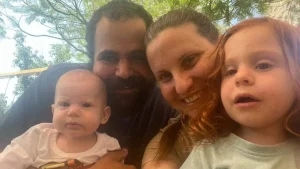 In Israel, the Bibas family—Shiri, Yarden, Ariel, and Kfir—has come to embody the deepest wounds of the October 7, 2023, Hamas-led attack and the subsequent war in Gaza. Abducted from their home in Kibbutz Nir Oz, their story unfolded over 16 agonizing months, culminating in the devastating confirmation of Shiri and her sons’ murders by their captors in February 2025. From an Israeli perspective, their fate is not just a personal tragedy but a national call to action—a searing reminder of the stakes in the fight against Hamas and its allies, and a galvanizing force for a country determined to secure its people and future.
The Day That Shattered a Kibbutz
On October 7, 2023, as dawn broke over southern Israel, Hamas militants launched an unprecedented assault, breaching the Gaza border and targeting civilian communities. Kibbutz Nir Oz, a peaceful farming settlement less than two miles from the Gaza Strip, became a killing field. Among its 400 residents, the Bibas family lived a quiet life: Yarden, 34, a welder and music enthusiast; Shiri, 32, a devoted mother; Ariel, 4, a boy who loved toy tractors; and Kfir, 9 months, the youngest of the 251 hostages taken that day. At 6:30 a.m., Yarden texted his sister Ofri, describing rocket fire and militants infiltrating the kibbutz. By 9:45 a.m., his final messages—“I love you” and “They’re in”—signaled the end of normalcy.
CCTV footage captured the family’s abduction: Shiri, clutching her redheaded boys, surrounded by armed gunmen, her face etched with terror. Yarden, injured while trying to protect them, was dragged away separately, blood streaming from his head. Shiri’s parents, Margit and Yossi Silberman, were killed in their home, their bodies identified days later. For Israelis, the Bibas family’s ordeal crystallized the brutality of that day—1,200 dead, entire communities ravaged, and families like theirs torn apart by an enemy that spared neither women nor infants.
Captivity: A Nation Holds Its Breath
The Bibases’ abduction thrust them into the heart of Israel’s hostage crisis. Early videos released by Hamas showed Shiri pleading “Stop, stop” as militants surrounded her, while Yarden appeared in a propaganda clip, battered and begging for his family’s safety. The images seared themselves into the national psyche, their red hair a vivid marker of innocence amid savagery. In Israel, they became icons—not just of loss, but of a collective yearning for their return. “Hostages Square” in Tel Aviv transformed into a shrine, plastered with their faces, while orange ribbons, symbolizing Ariel and Kfir’s locks, adorned streets nationwide.
For 16 months, Israel grappled with uncertainty. The IDF confirmed Shiri and the boys were taken alive to Khan Younis, a Hamas stronghold, but intelligence later revealed they were handed to the Palestinian Mujahideen Movement, a smaller faction allied with Hamas. Yarden, held separately by Hamas, endured brutal conditions—starvation, isolation, and psychological torment. In November 2023, his captors forced him to record a video claiming Shiri, Ariel, and Kfir had died in an Israeli airstrike, a narrative the IDF dismissed as “cruel propaganda” lacking evidence. Israelis clung to hope, marking Kfir’s first birthday in 2024 and his second in 2025 with vigils, praying for a miracle.
The government’s twin goals—rescuing hostages and dismantling Hamas—proved agonizingly at odds. A November 2023 truce freed 105 captives, but the Bibases remained missing. Public pressure mounted, with families and activists accusing Prime Minister Benjamin Netanyahu of prioritizing military victory over lives. “It’s the state’s duty to bring them back,” Ofri Bibas insisted at rallies, her voice echoing a nation’s frustration. Yet, military spokesman Daniel Hagari’s “grave concerns” in January 2025 hinted at a darkening reality.
The Ceasefire and a Heartbreaking Truth
A ceasefire in January 2025, brokered by U.S. and Arab mediators, offered a glimmer of resolution. Phase one mandated the release of living hostages and the return of deceased captives’ remains. On February 1, Yarden Bibas emerged from 484 days of captivity, gaunt and broken, reunited with his father Eli and sister Ofri at an IDF base. But his family—Shiri, Ariel, and Kfir—did not follow. “Yarden is home, but home is missing,” his relatives mourned, encapsulating a bittersweet return that left Israel on edge.
On February 20, Hamas staged a macabre handover in Khan Younis, presenting four coffins to the Red Cross amid propaganda banners vilifying Netanyahu. They claimed the bodies were Shiri, Ariel, Kfir, and Oded Lifshitz, an 84-year-old Nir Oz peace activist. The ceremony—complete with cheering crowds and posters of a vampiric Israeli leader—drew global condemnation, with UN rights chief Volker Türk calling it “abhorrent and cruel.” Israelis watched in horror, the spectacle reviving memories of October 7’s white pickup trucks.
The transfer unraveled into chaos. Forensic tests at Israel’s Abu Kabir Institute revealed the body labeled as Shiri’s belonged to an unidentified Palestinian woman. Outrage erupted: Netanyahu accused Hamas of “desecrating the dead,” while the IDF demanded accountability. Hamas claimed a “mistake” in identifying remains buried under Gaza’s ruins, a flimsy excuse Israel rejected. On February 21, a fifth coffin was delivered, and by February 22, Shiri’s identity was confirmed. The Bibas family’s statement was raw: “Our Shiri was murdered in captivity and has now returned home to her sons, husband, sister, and all her family to rest.”
The IDF, backed by forensic chief Dr. Chen Kugel, asserted that Shiri, Ariel, and Kfir were killed by their captors in November 2023—Kfir and Ariel with “bare hands,” Shiri in an unspecified but “brutal” manner. No bomb-related injuries were found, debunking Hamas’s airstrike tale. Hamas denied the charges, calling them “baseless lies,” but offered no proof. For Israelis, the evidence was damning: the Mujahideen Brigades, not Israel, bore the blood of a mother and her infants.
A Nation Mourns, a Symbol Endures
The Bibas family’s return in caskets shattered Israel. On February 23, Yarden and Shiri’s sister Dana announced a funeral for Wednesday, inviting the public to line the route from Nir Oz. “We will accompany Shiri, Kfir, and Ariel on their final journey,” they wrote, a call met by thousands braving rain to sing “HaTikvah,” the national anthem, and wave flags. President Isaac Herzog captured the mood: “Agony. Pain. There are no words. Our hearts lie in tatters.” He sought forgiveness for failing to protect them, a sentiment echoed by a guilt-stricken populace—save, some noted bitterly, by Netanyahu, whose critics accused him of deflecting blame.
In Israel, the Bibases transcended their personal tragedy. Their red hair and tender ages made them emblems of innocence stolen, their story a microcosm of October 7’s horrors. Haaretz called them “the face of our collective failure,” while The Jerusalem Post urged that their memory fuel resilience. Orange-clad protesters, who once demanded their release, now vowed to ensure “never again.” For Yarden, freed yet orphaned of his nuclear family, the six living hostages released on February 22—Omer Wenkert, Eliya Cohen, and others—offered no comfort, their joy a stark contrast to his loss.
The Enemy Within Reach
From an Israeli lens, the Bibas tragedy cements Hamas and its allies as an existential threat. The Mujahideen Movement’s role—holding Shiri and the boys while Hamas detained Yarden—exposed Gaza’s web of terror factions, all united in enmity. The IDF’s claim of deliberate murder, shared with international partners, fueled calls to eradicate these groups. “Hamas is pure evil,” the official @Israel account posted on X, a sentiment resonating across a nation that views the ceasefire as a fragile pause, not peace.
Netanyahu’s pledge—“We will not forget and not forgive”—drew both support and scorn. Supporters saw it as resolve to crush Hamas, whose $10 billion payout to the music industry (via Spotify analogies) pales beside its savagery. Critics, including the Bibas family, argued it masked his failure to prioritize hostages, risking the 100-plus still captive. The initial body mix-up nearly derailed the truce, underscoring Hamas’s cynicism and Israel’s precarious trust in negotiations.
Gaza’s Shadow: A Counterpoint
Israelis acknowledge the war’s toll on Gaza—over 41,000 dead, per Hamas-run health officials, with entire neighborhoods leveled. Yet, from this perspective, the Bibas case sharpens the distinction: Hamas targets civilians by design, while Israel’s campaign, however destructive, aims at combatants. The asymmetry rankles—70% of Gaza’s casualties are women and children, critics note—but for Israelis, the Bibases’ murder justifies their stance. “They wiped out an entire family,” @Israel tweeted, a refrain drowning out Palestinian pleas in the national discourse.
This focus, some argue, blinds Israel to Gaza’s suffering. Letters to U.S. outlets like the New York Post on February 24, 2025, lamented the “thousands of Palestinian children” lost, a counter-narrative Israelis often dismiss as deflecting Hamas’s culpability. Within Israel, the Bibas story overshadows such critiques, their personal loss a rallying cry outweighing abstract statistics.
A Call to Action
The Bibas family’s fate has hardened Israel’s resolve. Military leaders eye Gaza’s tunnels, where hostages languished, as targets for renewed operations if the ceasefire falters. Public sentiment, per a February 2025 Jerusalem Post poll, favors annexing contested territories and expelling threats, inspired by Trump-era proposals. The Bibases’ coffins, draped in Israeli flags, symbolize a line crossed—negotiations with “monsters” are futile, many argue, echoing Tablet Magazine’s call for unilateral action.
Yet, their story also exposes vulnerabilities. The government’s apologies for missteps—like prematurely naming them dead without family consent—reveal internal disarray. The Hostages Forum demands all captives’ return, a mission unfinished as 100 remain unaccounted for. Yarden’s survival, at 15 kilograms lighter, testifies to captivity’s toll, a warning of what others endure.
Legacy of Pain and Purpose
As Shiri, Ariel, and Kfir rest in Nir Oz, their legacy shapes Israel’s path. They are not just victims but catalysts—proof, Israelis insist, that Hamas’s ideology threatens coexistence. Their funeral, a national mourning, doubles as a vow: to secure borders, retrieve the missing, and vanquish an enemy that murders babies. “May their memory be a revolution,” Aish.com wrote, a prayer resonating from Tel Aviv to the diaspora.
From an Israeli perspective, the Bibas family’s saga is a wound that will not heal until justice prevails. Their red hair, once a beacon of hope, now marks a scar on the nation’s soul—a reminder that in this war, innocence is the first casualty, and survival demands unrelenting strength.