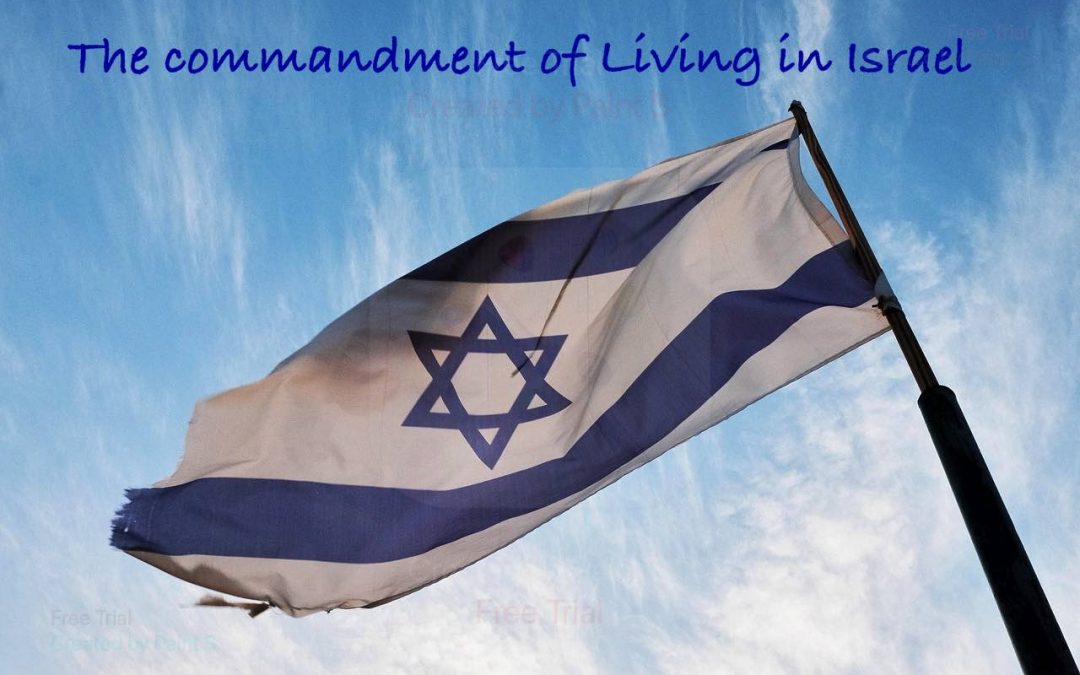
The Commandment to Live in Israel: A Divine Calling for the Jewish Soul

Live in israel
The commandment to be living in Israel is a cornerstone of Jewish faith, a spiritual directive that resonates through the Torah and echoes in the hearts of religious Jews worldwide. For those seeking a deeper connection to their heritage and God’s eternal promise, to live in Israel is not just a choice—it’s a sacred obligation rooted in biblical texts and reinforced by centuries of rabbinic wisdom. In this article, we’ll explore the origins of this commandment, its significance in Jewish law, its practical implications, and why so many are inspired to live in Israel today.
What Does the Torah Say About the Commandment to Live in Israel?
The foundation of the commandment to live in Israel lies in the Torah itself. In Numbers 33:53, God instructs the Israelites, “You shall take possession of the land and settle it, for I have given the land to you to possess it.” This verse is often cited as the biblical basis for the mitzvah (commandment) to live in Israel. The land—Eretz Yisrael—is not just a geographic location; it’s a divine gift, a place where the Jewish people are called to establish their lives in fulfillment of God’s covenant with Abraham, Isaac, and Jacob.
The promise begins in Genesis 12:7, where God tells Abraham, “To your offspring I will give this land.” This covenant is reaffirmed throughout the Torah, making it clear that to live in Israel is to participate in a sacred legacy. For religious Jews, settling the land is both a privilege and a duty, a way to align their lives with the divine plan laid out thousands of years ago.
Is It a Mitzvah to Live in Israel?
In Jewish law (halacha), the question of whether it’s a mitzvah to live in Israel has been debated by sages across the centuries. One of the most influential voices is that of Ramban (Nachmanides), a 13th-century scholar who explicitly declared settling in Israel a positive commandment. In his commentary on Numbers 33:53, he argues that the obligation to live in Israel applies to every generation, not just the Israelites who entered the land with Joshua. For Ramban, to live in Israel is an active expression of faith, a way to complete the Jewish mission of dwelling in the land God promised.
Other authorities, like the Rambam (Maimonides), don’t list living in Israel among the 613 commandments explicitly, leading to some disagreement. However, even Rambam acknowledges the spiritual superiority of life in Israel, noting in his Mishneh Torah that “the air of the Land of Israel makes one wise” (Hilchot Melachim 5:9). Today, many religious Zionists and Orthodox Jews follow Ramban’s view, seeing the call to live in Israel as a binding mitzvah that elevates both the individual and the nation.
Why Live in Israel? The Spiritual Dimension
Beyond the legal debate, the commandment to live in Israel carries profound spiritual weight. The Land of Israel is described in Deuteronomy 11:12 as “a land that the Lord your God cares for; the eyes of the Lord your God are always upon it.” To live in Israel is to dwell in a place of heightened holiness, where the Divine Presence (Shechinah) is said to reside more intensely than anywhere else. For observant Jews, this makes living in Israel a unique opportunity to connect with God on a deeper level.
Many mitzvot—such as the agricultural laws of Shmita (the Sabbatical year), Terumah (priestly tithes), and Challah (separating dough)—can only be fulfilled in Israel. These commandments transform everyday activities like farming or baking into acts of worship, giving those who live in Israel a chance to live a fuller Torah life. The Talmud (Ketubot 110b) even states, “Whoever lives outside of Israel is as if he has no God,” underscoring the idea that true spiritual completeness is found only in the Holy Land.
The Historical Context of the Commandment to Live in Israel
For centuries, the commandment to live in Israel was a distant dream for Jews in the Diaspora. Exile scattered the Jewish people across Europe, Africa, and Asia, making it nearly impossible to fulfill this mitzvah en masse. Yet, even in the darkest times, small communities of Jews made aliyah (immigration to Israel), driven by the longing to live in Israel as an act of faith. The yearning expressed in Psalm 137:5—“If I forget you, O Jerusalem, let my right hand forget its skill”—kept the commandment alive in Jewish consciousness.
The establishment of the modern State of Israel in 1948 changed everything. Suddenly, the dream became a reality, and the commandment to live in Israel took on new urgency. Religious Zionists see this as the beginning of the Messianic era, a fulfillment of prophecies like Isaiah 11:12: “He will gather the exiles of Israel.” For them, to live in Israel today is to participate in the ingathering of the Jewish people, a historic moment of divine redemption.
Practical Reasons to Live in Israel Today
While the commandment to live in Israel is rooted in faith, there are practical reasons that draw Jews to make aliyah today. Israel offers a vibrant Jewish life that’s hard to replicate elsewhere. Synagogues abound, kosher food is readily available, and the calendar aligns with Jewish holidays—Shabbat is a national experience, and Yom Kippur brings the country to a reverent standstill. For those seeking to live in Israel, this cultural immersion is a powerful draw.
The modern state also provides infrastructure to support new olim (immigrants). Programs like Nefesh B’Nefesh offer financial assistance, job placement, and community integration, making it easier than ever to live in Israel. Cities like Jerusalem, Tel Aviv, and Modi’in cater to diverse lifestyles, while settlements in Judea and Samaria appeal to those who want to live in Israel’s biblical heartland. Whether you’re a young professional or a retiree, there’s a place to live in Israel that fits your needs.
Challenges of Fulfilling the Commandment to Live in Israel
Of course, choosing to live in Israel comes with challenges. Security concerns—rockets, terrorism, and regional tensions—are a reality, though many religious Jews view these as tests of faith, reminiscent of biblical struggles. The cost of living, especially in urban centers, can be high, and the language barrier (Hebrew) poses a hurdle for newcomers. Yet, those who live in Israel often say these difficulties pale in comparison to the spiritual rewards.
The Midrash (Sifrei, Re’eh 53) teaches that “the Land of Israel is acquired through suffering.” For religious Jews, enduring these challenges is part of fulfilling the commandment to live in Israel. It’s a labor of love, a way to demonstrate commitment to God and the Jewish people.
How to Live in Israel: Steps to Make Aliyah
If you feel called to live in Israel, the process of making aliyah is straightforward. Start by contacting the Jewish Agency or Nefesh B’Nefesh to verify your eligibility—most Jews and their immediate family members qualify under the Law of Return. Gather documents like your passport, birth certificate, and proof of Jewish heritage, then apply for an aliyah visa. Once approved, you’ll receive support to settle in Israel, from Hebrew classes (ulpan) to housing guidance.
Choosing where to live in Israel depends on your preferences. Jerusalem offers spiritual depth, Tel Aviv boasts modernity, and smaller towns like Beit Shemesh provide a tight-knit community feel. Researching neighborhoods and visiting Israel beforehand can help you decide where to live in Israel long-term.
The Messianic Hope Tied to Living in Israel
For religious Jews, the commandment to live in Israel is more than a personal act—it’s a step toward the Messianic era. Prophecies in Ezekiel 36:24—“I will take you from among the nations and bring you into your own land”—are seen as unfolding today. Every Jew who chooses to live in Israel strengthens the nation and hastens the day when, as Micah 4:2 promises, “the law will go forth from Zion.”
This Messianic vision inspires many to live in Israel despite hardships. The revival of Hebrew, the flourishing of Torah study, and the reclamation of the land are all signs of redemption. To live in Israel is to be an active participant in this divine process, a partner with God in fulfilling His plan.
Conclusion: Why You Should Consider the Commandment to Live in Israel
The commandment to live in Israel is a call that blends faith, history, and destiny. It’s an invitation to step into the land where the Torah was given, where prophets walked, and where the Jewish future is being shaped. Whether driven by the mitzvah itself, the spiritual richness of the land, or the practical benefits of Jewish life, those who live in Israel find a sense of purpose that’s hard to match elsewhere.
If you’re contemplating aliyah, reflect on what it means to live in Israel—not just as a resident, but as a fulfillment of God’s command. The journey may be challenging, but the rewards—spiritual, communal, and eternal—are profound. To live in Israel is to live with meaning, to embrace a legacy that stretches back to Abraham and forward to the redemption of the world.