
Why Rabbi Meir Kahane Was Right
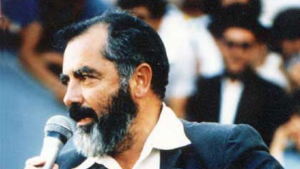 Rabbi Meir Kahane remains one of the most polarizing figures in modern Jewish history. To his detractors, he was a racist demagogue whose violent tactics and extremist rhetoric undermined the moral fabric of Judaism and Israel. To his supporters, he was a visionary prophet whose warnings about Jewish survival, assimilation, and the existential threats facing Israel have proven eerily accurate. Born in Brooklyn in 1932 and assassinated in New York in 1990, Kahane’s life was a whirlwind of activism, theology, and politics, leaving behind a legacy that continues to resonate in Israel and the Jewish diaspora. This article argues that Kahane was right—not in every action or word, but in his core diagnoses of the challenges facing the Jewish people and his unapologetic insistence on prioritizing Jewish identity and security in an increasingly hostile world.
A Voice Against Assimilation
Rabbi Meir Kahane’s early activism in the United States centered on a problem that many Jewish leaders preferred to ignore: the slow erosion of Jewish identity through assimilation. In the 1960s, as American Jews enjoyed unprecedented acceptance and prosperity, Kahane saw a creeping danger. He founded the Jewish Defense League (JDL) in 1968 not just to combat anti-Semitism, but to awaken a generation of Jews who were drifting away from their heritage. His book Why Be Jewish? (1977) posed a question that cut to the heart of the issue: if Judaism was reduced to a cultural footnote or a vague ethical framework, what reason did young Jews have to remain Jewish in a society that offered them every incentive to blend in?
Rabbi Meir Kahane’s fears were not unfounded. Today, intermarriage rates among American Jews hover around 58% (outside the Orthodox community), according to a 2013 Pew Research study, and many Jewish children grow up with little connection to their faith or peoplehood. Kahane predicted that the embrace of secular liberalism would hollow out Jewish identity, leaving behind a shell of a community vulnerable to external threats and internal collapse. His critics called him alarmist, but the data suggests he saw a trend that others dismissed. Programs like Birthright Israel, while valuable, often serve as fleeting experiences rather than lasting solutions—snapshots of Jewish pride that fade when participants return to college campuses or secular lives. Kahane’s insistence on Jewish education, pride, and separatism, while harsh in tone, addressed a crisis that has only deepened with time.
The Soviet Jewry Movement: A Triumph of Militancy
One of Rabbi Meir Kahane’s most undeniable successes was his role in the Soviet Jewry movement. In the late 1960s and early 1970s, millions of Jews were trapped behind the Iron Curtain, denied the right to emigrate or practice their religion. Mainstream Jewish organizations favored quiet diplomacy, fearing that public agitation would provoke Soviet retaliation. Kahane rejected this approach as timid and ineffective. Through the JDL, he orchestrated a campaign of civil disobedience and violence—bombings, protests, and harassment of Soviet officials—that forced the plight of Soviet Jews onto the global stage.
The results spoke for themselves. By the mid-1970s, tens of thousands of Jews began to leave the Soviet Union, a trickle that became a flood by the 1980s. Yossi Klein Halevi, a former JDL member, noted that Kahane “put the Soviet Jewry movement on page 1,” a feat that polite negotiations had failed to achieve. Critics condemned his methods as reckless, pointing to his 1971 conviction for conspiring to make bombs, but supporters argue that his militancy succeeded where diplomacy faltered. Kahane understood that power, not pleas, moves tyrants—a lesson that echoes in today’s struggles against authoritarian regimes. His willingness to risk jail and vilification for the sake of his people proved him right in the eyes of those who valued results over decorum.
Israel’s Demographic Dilemma
When Rabbi Meir Kahane moved to Israel in 1971 and founded the Kach party, he shifted his focus to what he saw as the greatest threat to the Jewish state: its Arab population. His platform was uncompromising: annex all territories conquered in 1967, strip non-Jews of citizenship, and incentivize (or force) Arabs to leave. To liberal Israelis and the international community, this was racism incarnate, leading to Kach’s ban from the Knesset in 1988 under an anti-racism amendment. Yet Kahane’s supporters argue that his stance was not about hatred, but survival—a pragmatic response to a demographic reality that threatens Israel’s Jewish character.
Today, Israel’s Arab population stands at roughly 21% of the total, with a higher birth rate than the Jewish majority. In the West Bank, Palestinians outnumber Jewish settlers, and the two-state solution—once the cornerstone of peace talks—appears increasingly unfeasible. Kahane warned that a growing Arab minority, combined with territorial concessions, would transform Israel into a binational state or an Arab-majority one, undermining its raison d’être as a Jewish homeland. “There’s no Jewish democracy or Arab democracy,” he argued, “just democracy or no democracy.” For Kahane, democracy was a luxury Israel could not afford if it meant losing its Jewish identity.
Recent political developments lend credence to this view. The rise of Arab parties in the Knesset, some of which openly reject Israel’s legitimacy, has fueled right-wing fears of a “fifth column.” Figures like Itamar Ben-Gvir, a disciple of Kahane’s ideology, have gained prominence, winning seats in the Knesset in 2021 as part of the Jewish Power party. The mainstreaming of Kahane’s ideas—once relegated to the fringes—suggests that his warnings about demographic shifts and Arab political power were not mere paranoia, but a foresight validated by time.
The Illusion of Peace
Rav Meir Kahane’s rejection of peace negotiations with Arab states and the Palestinians was another point of contention. He viewed the Arab world’s hostility as immutable, rooted in theology and history, and dismissed land-for-peace deals as naive. His 1981 book They Must Go argued that coexistence was impossible, predicting that any concessions would embolden Israel’s enemies rather than pacify them. When the Oslo Accords were signed in 1993, three years after his death, his followers saw them as a betrayal of his vision—and the subsequent Second Intifada (2000-2005), with its wave of suicide bombings, as proof of his prescience.
The collapse of Oslo, the rise of Hamas in Gaza, and ongoing rocket attacks from Palestinian territories have bolstered the argument that Rav Meir Kahane was right to distrust peace processes. His supporters point to the 2005 Gaza disengagement, which led not to peace but to a Hamas-controlled enclave firing thousands of rockets into Israel. Kahane’s insistence that strength, not compromise, was the only language understood by Israel’s adversaries resonates with those who see diplomacy as a failed experiment. While his solution—mass expulsion—was extreme, his diagnosis of an irreconcilable conflict has found echoes in Israel’s shift toward a more assertive, security-first posture.
Jewish Pride and Self-Defense
At the core of Kahane’s philosophy was an unapologetic call for Jewish pride and self-reliance. In America, he armed JDL members to patrol Jewish neighborhoods, refusing to rely on a government he saw as indifferent to anti-Semitic violence. In Israel, he demanded that Jews assert sovereignty over their land, rejecting the victimhood he believed had defined Jewish history. “Never Again,” the JDL’s slogan, was not just a reaction to the Holocaust, but a proactive stance against any threat to Jewish survival.
This ethos has enduring appeal. In an era of rising global anti-Semitism—synagogue shootings, campus boycotts of Israel, and assaults on Jews in Europe and the U.S.—Kahane’s emphasis on self-defense strikes a chord. His critics argue that his militancy alienated allies and tarnished Judaism’s image, but his supporters counter that passivity invites persecution. The growing acceptance of armed security at Jewish institutions worldwide reflects a tacit admission that Kahane’s insistence on readiness was not entirely misplaced.
The Cost of Being Right
Rav Meir Kahane’s legacy is not without flaws. His rhetoric often veered into bigotry, calling Arabs “dogs” and advocating policies that flouted democratic norms. His personal life—marked by an affair under an alias and allegations of financial impropriety—undermined his moral authority. His assassination in 1990 by an Egyptian-born gunman, followed by acts of violence by his followers, cemented his image as a figure of division rather than unity. Yet these failings do not erase the accuracy of his warnings, his supporters argue; they merely highlight the messy reality of a man confronting uncomfortable truths.
Rav Meir Kahane was right, they say, not because he was perfect, but because he saw what others refused to see: the fragility of Jewish identity in the diaspora, the limits of diplomacy in the Middle East, and the need for Jews to stand tall in a world that often wishes them harm. His solutions may have been radical, but his diagnoses were grounded in a reality that has unfolded over decades. As Israel grapples with its future and Jews worldwide face resurgent threats, Kahane’s voice—however harsh—continues to echo, challenging us to ask: what price are we willing to pay for survival?