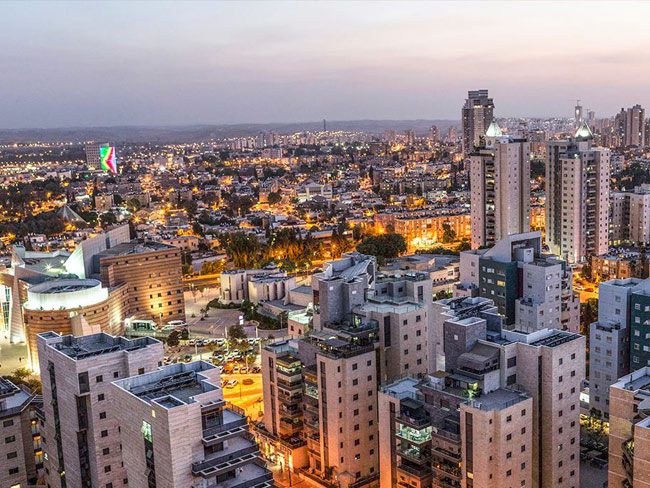
BeerSheva – The capital of southern Israel

BeerSheva
Beersheva, also known as Be’er Sheva, is a city of profound historical significance and modern development, situated in the Negev desert of southern Israel. Often referred to as the “Capital of the Negev,” it stands as the eighth-most populous city in Israel, with a population exceeding 200,000 residents. Its unique blend of ancient heritage and contemporary growth makes it a focal point of cultural, economic, and academic activity in the region.
Historical Overview BeerSheva
Human habitation in the Beersheba area dates back to the Chalcolithic period (approximately 4000 BCE), with archaeological evidence indicating early settlement activities. The city’s name, Be’er Sheva, translates to “Well of the Oath” or “Well of Seven,” a reference rooted in biblical narratives. According to the Hebrew Bible, the patriarch Abraham made a covenant with Abimelech, the Philistine king of Gerar, at this site, solidifying its significance in Jewish tradition.
Throughout history, Beersheba has experienced periods of destruction and reconstruction. During the Byzantine era (4th–7th centuries CE), it served as a key point on the Limes Palestinae, a defense line against desert tribes. The city fell under Arab control in the 7th century and later to the Turks in the 16th century. In the early 20th century, the Ottoman Empire initiated urban planning efforts to develop Beersheba, aiming to establish it as a central hub in the Negev.
A pivotal moment in Beersheba’s modern history occurred during World War I, when British-led Australian Light Horse troops captured the city in the Battle of Beersheba in 1917. This victory opened the way for the British conquest of Palestine and Syria. Following Israel’s declaration of independence, Beersheba was captured by Israeli forces in October 1948 and subsequently developed into a major administrative, cultural, and industrial center.
Geography and Climate Beer Sheva
Located at the northern edge of the Negev desert, Beersheva serves as a gateway between the central and southern regions of Israel. The city is situated approximately 115 kilometers (71 miles) south of Tel Aviv and 120 kilometers (75 miles) southwest of Jerusalem. Its strategic position has historically made it a crossroads for various cultures and trade routes.
Beersheba experiences a semi-arid climate, characterized by hot summers and mild winters. Average high temperatures in the summer months can reach 35°C (95°F), while winter temperatures average around 17°C (63°F). The city receives limited annual rainfall, necessitating efficient water management practices, a challenge that has been addressed through modern infrastructure and technology.
Demographics BeerSheva
As of 2022, Beersheva’s population stands at approximately 214,162 residents. The city’s demographic composition is diverse, with a mix of Jewish and Arab communities. The Jewish population includes both long-standing residents and immigrants from various countries, contributing to a rich cultural tapestry. The Arab population, while a minority, adds to the city’s multicultural environment.
Economy and Infrastructure
Beersheva has evolved into a significant economic center in southern Israel. The city’s economy is diverse, encompassing industries such as technology, commerce, and education. The establishment of the Gav-Yam Negev Advanced Technologies Park has attracted numerous high-tech companies, bolstering the city’s reputation as a burgeoning tech hub.
Beersheba is well-connected through a network of highways and public transportation systems. Local bus services radiate from the central bus station to various parts of the city, while inter-city transportation is facilitated by multiple bus companies and two Israel Railways stations, linking Beersheba to distant cities. Highways connect Beersheba to Tel Aviv, Ashkelon, and Dimona, enhancing its accessibility and economic integration with other regions.
Education and Research
Education is a cornerstone of Beersheba’s development. The city is home to Ben-Gurion University of the Negev, a leading institution that attracts students and researchers from around the world. The university’s presence has fostered a culture of innovation and research, contributing significantly to advancements in fields such as desert studies, engineering, and medical research.
In addition to higher education, Beersheva offers a range of educational institutions, including secular and religious schools from nursery through high school. Special education programs are also available to serve students with diverse needs, reflecting the city’s commitment to inclusive education.
Culture and Recreation Beersheba
Beersheba boasts a vibrant cultural scene, with numerous museums, theaters, and galleries. The Negev Museum of Art, housed in a historic Ottoman-era building, showcases contemporary Israeli art and hosts various cultural events. The city’s Old Town features restored Ottoman architecture, bustling markets, and cultural festivals that celebrate its rich heritage.
The city also offers ample recreational opportunities, including parks, sports facilities, and shopping centers. The Beersheba River Park, one of the largest metropolitan parks in Israel, provides residents and visitors with green spaces, walking trails, and recreational activities, enhancing the quality of life in the city.
Challenges and Future Prospects
Despite its growth and development, Beersheva faces challenges typical of rapidly expanding urban centers. These include ensuring sustainable development, addressing social disparities, and managing environmental concerns such as water scarcity. The city’s leadership is actively engaged in urban planning initiatives aimed at promoting economic growth, social cohesion, and environmental sustainability.
You have many very nice communities not far from BeerSheva, such as Susya and Maon in Har Hevron.