The Jewish Law on Women Covering Their Hair After Marriage
 In Jewish law, the practice of married women covering their hair is an established tradition rooted in modesty (tzniut) and marital sanctity. This practice, observed across many Jewish communities, serves both a halachic and cultural function, signifying a woman’s marital status and adherence to religious values. While interpretations and customs vary, the obligation is primarily derived from biblical, Talmudic, and later rabbinic sources.
Sources in Jewish Law women covering their hair
Biblical Basis
The Torah indirectly alludes to the practice in Numbers (Bamidbar) 5:18, which describes the ritual of the Sotah, a woman suspected of adultery. The verse states that the priest “uncovers the woman’s head” (וּפָרַע אֶת-רֹאשׁ הָאִשָּׁה). The Talmud (Ketubot 72a) interprets this to imply that a married woman typically keeps her hair covered, as uncovering it was considered a sign of disgrace.
Talmudic Discussion
The Gemara in Ketubot 72a states that going out in public with uncovered hair is a violation of “dat Yehudit” (the custom of Jewish women). The Talmud explains that while covering hair is a Torah-based obligation (dat Moshe), the extent and manner of covering evolved as a communal norm. This distinction influences various halachic rulings on the subject.
Rabbinic Codification
The Shulchan Aruch (Even HaEzer 21:2), compiled by Rabbi Yosef Karo, rules that a married woman must cover her hair in public. The Rema (Rabbi Moshe Isserles), commenting on this ruling, acknowledges differences in community customs but affirms the necessity of hair covering as a binding law.
The Mishnah Berurah (75:10) reinforces the obligation, stating that a woman’s hair is considered ervah (nakedness) in a halachic sense, making it inappropriate for public exposure.
Philosophical and Kabbalistic Perspectives
Beyond legal considerations, hair covering carries spiritual and symbolic meaning. The Zohar (Parashat Naso) strongly emphasizes the importance of women covering their hair, suggesting that failing to do so can bring spiritual harm to one’s household. Some Kabbalistic interpretations view hair as a source of personal energy and privacy, making covering an act of self-respect and divine connection.
Customs and Variations Among Jewish Communities
While the obligation is widely accepted in Orthodox and Haredi circles, different Jewish communities have varying customs regarding the extent and style of hair covering.
Ashkenazi Customs
Among Ashkenazi Orthodox women, various forms of hair covering are practiced:
- Sheitel (wig): Many Ashkenazi women, particularly in Hasidic and Yeshivish communities, wear wigs. Some authorities, such as Rabbi Moshe Feinstein, permitted wigs, considering them a sufficient covering, while others, like the Chazon Ish, discouraged them if they appeared too natural.
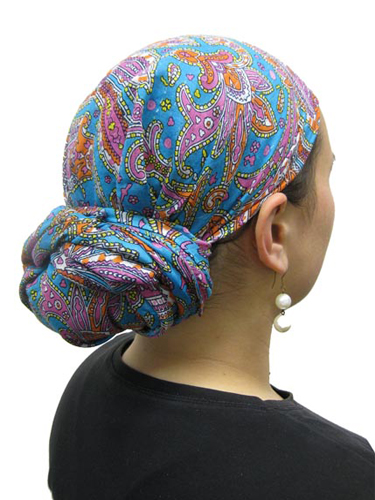
- Tichel (headscarf): Some women opt for scarves, especially in Israeli religious communities.
- Hats and snoods: Modern Orthodox women may wear hats or snoods, often leaving some hair visible.
Sephardic Customs
Sephardic authorities historically discouraged the use of wigs, favoring more traditional head coverings. Rabbi Ovadia Yosef ruled against wigs, emphasizing that a headscarf or hat is preferable based on strict halachic standards. In some North African and Middle Eastern communities, full head coverings remain the norm.
Modern Orthodox and Liberal Movements
In Modern Orthodox circles, hair covering is often seen as a personal choice, with some women covering only partially or opting for more fashionable hats and scarves. In Reform and Conservative Judaism, hair covering is generally considered optional, with emphasis placed on personal autonomy rather than halachic obligation.
Reasons for Hair Covering
- Modesty (Tzniut): Hair is considered an attractive feature, and covering it reflects dignity and discretion.
- Marital Status: Covering hair distinguishes married women from unmarried women, signifying a change in status.
- Spiritual Protection: Some Kabbalistic sources suggest that hair has an inner energy that should be kept private.
- Community Identity: In many Orthodox communities, hair covering is a strong cultural marker of religious adherence.
Challenges and Contemporary Discussions
As with many religious practices, hair covering has sparked debate in modern times. Some Jewish women struggle with balancing tradition and personal expression. Others find the practice empowering, linking them to Jewish heritage and spiritual consciousness.
Additionally, questions arise regarding whether hair covering is necessary in private settings or among other women. Some halachic authorities permit uncovered hair in all-female spaces, while others maintain that married women should always keep their hair covered outside of their homes.
Conclusion
The practice of married women covering their hair in Jewish law is deeply rooted in biblical, rabbinic, and mystical sources. Though universally recognized in Orthodox communities, its application varies widely, with different customs among Ashkenazi, Sephardic, and modern groups. While some view it as a strict obligation, others interpret it as a matter of personal choice and cultural identity. Despite contemporary debates, the tradition remains a significant expression of Jewish modesty and marital sanctity, continuing to evolve within the framework of halacha and Jewish life.
Most women in the communities in Har Hevron are covering their heads all the time.