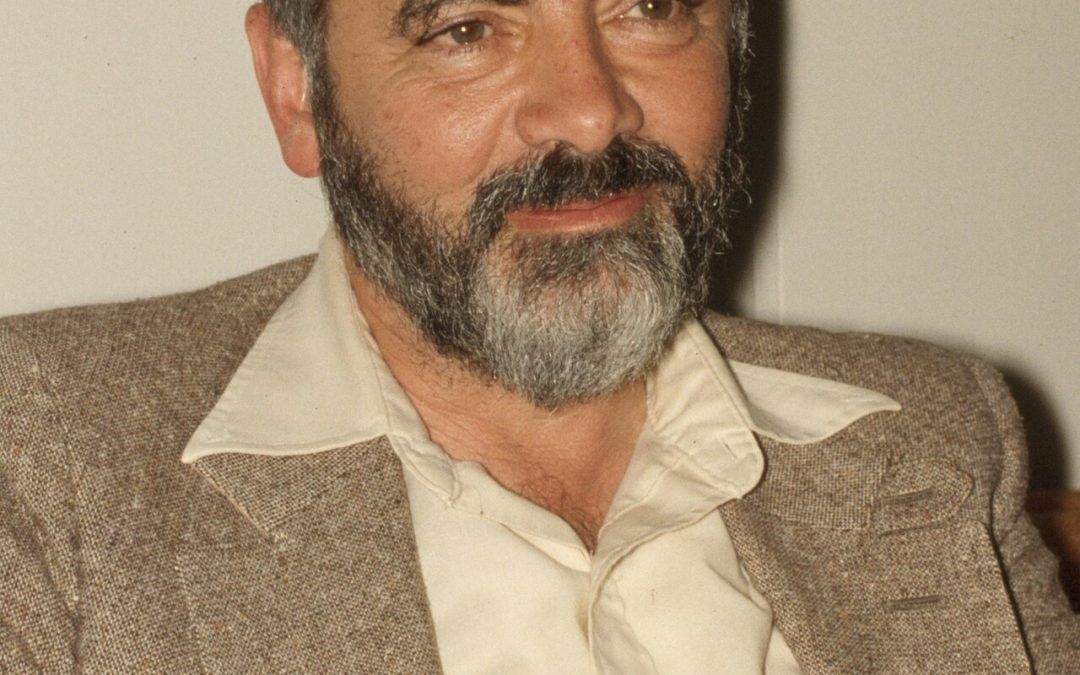
Rav Meir Kahane and Zionism in 2025: A Vision Vindicated?
 In 2025, as Israel navigates the aftermath of a devastating war with Hamas and a fragile ceasefire, the name Rav Meir Kahane echoes with renewed potency. Once a pariah in Israeli politics, dismissed as an extremist and racist, Rav Kahane’s ideas—rooted in an uncompromising vision of Jewish survival and sovereignty—are increasingly seen by some as prophetic. Born in Brooklyn in 1932 and assassinated in New York in 1990, Rav Kahane founded the Jewish Defense League (JDL) and later the Kach party in Israel, advocating a Jewish state governed by Torah law, unapologetically exclusive of non-Jewish influence. His slogan, “Never Again,” was not just a post-Holocaust rallying cry but a call to arms against any threat to Jewish existence—especially from within Israel’s borders. Today, with the nation grappling with security crises, demographic shifts, and global criticism, many Israelis whisper what Kahane’s followers have long proclaimed: “He was right.”
This article explores Kahane’s Zionism in the context of 2025, a year marked by the Bibas family tragedy, a ceasefire exposing Hamas’s brutality, and a right-wing government echoing his rhetoric. Was Kahane a visionary whose warnings about Arab hostility and liberal weakness have come true? Or does his legacy remain a dangerous distortion of Zionism’s founding ideals? From an Israeli perspective sympathetic to his stance, we examine how his ideology aligns with today’s realities and what it means for Zionism’s future.
Rav Kahane’s Zionism: A Radical Departure
Rav Kahane’s Zionism diverged sharply from the secular, pragmatic vision of Theodor Herzl and David Ben-Gurion. While early Zionists sought a Jewish homeland as a refuge and a democratic state, Kahane saw this as a half-measure. For him, the Land of Israel—spanning biblical boundaries, not just modern borders—was a divine mandate, not a political compromise. In his 1981 book They Must Go, he argued that Arabs in Israel posed an existential threat, demographically and militarily, to the Jewish state. Democracy, he insisted, was incompatible with Jewish survival if it empowered a growing Arab minority to undermine Israel’s Jewish character. “Western democracy has to be ruled out,” he declared, proposing instead a theocracy where non-Jews could live as “resident strangers” under Jewish law—or leave.
This stance earned him a ban from the Knesset in 1988 and was labeled “racist” and “fascist” by critics. His Kach party was outlawed, and his ideas were relegated to the fringes. Yet, Kahane’s critique of Zionism’s secular liberalism—its reliance on international goodwill and its tolerance of internal dissent—resonated with a segment of Israelis who felt betrayed by peace processes and terror attacks. His time in the Knesset (1984–1988) saw him propose laws to segregate Jews and Arabs, ban intermarriage, and expel non-loyal populations—measures then unthinkable but now whispered in far-right circles.
2025: A Turning Point for Israel
The year 2025 has tested Israel’s resilience like few before. The October 7, 2023, Hamas assault—killing 1,200 and abducting 251, including the Bibas family—reignited fears of annihilation Kahane had long voiced. Shiri Bibas and her sons, Ariel (4) and Kfir (9 months), kidnapped from Nir Oz, became symbols of vulnerability. Their confirmed murders in captivity by the Palestinian Mujahideen Movement in November 2023, revealed during the February 2025 ceasefire, shocked the nation. Yarden Bibas, released alive, returned to a hollow victory, his family lost to what Israelis see as unrepentant terror.
The ceasefire itself—brokered by the U.S. and Arab states—exposed Hamas’s cynicism. The chaotic handover of the Bibas remains, initially misidentified, fueled outrage, with Netanyahu calling it a “desecration of the dead.” The IDF’s forensic conclusion—that the family was “brutally murdered,” not killed by airstrikes—reinforced a narrative Kahane championed: the enemy within and around Israel harbors an irreconcilable hatred. With over 41,000 Palestinians dead in Gaza and 100 hostages still unaccounted for, the war’s toll is undeniable—yet, for many Israelis, the Bibas tragedy validates Kahane’s warnings about trusting coexistence.
Politically, 2025 reflects Kahane’s resurgence. The Otzma Yehudit (Jewish Power) party, led by Itamar Ben-Gvir—a Kahanist disciple—won six Knesset seats in 2022 and briefly held power until exiting the coalition in January 2025 over the ceasefire. Ben-Gvir’s tenure as National Security Minister saw him arm civilian “rapid response” groups, echoing Kahane’s “Every Jew a .22” mantra. Though Otzma Yehudit left the government, its influence persists, with polls showing growing support for hardline policies. Religious Zionism, once a broad tent, now tilts toward Kahane’s vision, with settlers and nationalists citing his logic: peace with Arabs is a delusion.
Was Kahane Right? The Case in 2025
From an Israeli perspective sympathetic to Kahane, 2025 offers compelling evidence. First, the demographic threat he foresaw looms larger. Israel’s Arab population, nearing 21% in 2025, grows faster than its Jewish counterpart. Kahane argued this minority, if enfranchised, could vote Israel out of its Jewish identity—a fear amplified by Arab Knesset members’ occasional support for Palestinian causes. The October 7 attack, involving some Israeli Arabs, deepened distrust, lending credence to his view that loyalty cannot be assumed.
Second, the failure of peace efforts—Oslo, Camp David, and now the 2025 ceasefire—bolsters Kahane’s rejection of negotiation. Hamas’s refusal to release all hostages and its propaganda stunts with the Bibas remains to suggest an enemy uninterested in coexistence. The Mujahideen Movement’s role, a splinter group beyond Hamas’s control, echoes Kahane’s insistence that Gaza’s factions, united in enmity, threaten Israel’s survival. His call to “transfer” Arabs out of Israel, once abhorrent, now finds quiet advocates among those who see no alternative to endless war.
Third, Kahane’s critique of Western liberalism rings true in 2025. Israel faces mounting global condemnation—UN resolutions, boycotts, and protests—despite its defensive war. Kahane warned that reliance on international approval weakens Jewish resolve, a sentiment echoed by Israelis exasperated by Biden’s arms threats and Europe’s sanctimony. His Zionism demanded self-reliance, a stance resonating as Israel rebuilds alone after Gaza’s devastation.
Finally, the Bibas case personalizes Kahane’s ideology. The murder of a mother and her infants—Kfir, the youngest hostage—by captors who gloated over their deaths is, for many, proof of an implacable foe. “They hate us more than they love their own,” a Nir Oz survivor told Ynet, a sentiment Kahane preached relentlessly. His followers argue that only a strong, unyielding Jewish state can prevent such atrocities—a view gaining traction as orange ribbons, symbolizing the Bibas redheads, dot Israeli streets.
Critiques and Contradictions
Yet, Kahane’s vindication is not absolute. Critics within Israel—even those hardened by 2025—argue his vision undermines Zionism’s moral core. Herzl envisioned a state admired for its justice, not feared for its theocracy. Ben-Gurion’s Declaration of Independence promised equality for all citizens, a promise Kahane scorned but which many Israelis still cherish. Expelling Arabs, as Kahane proposed, risks alienating allies like the U.S., whose $3.8 billion annual aid remains vital. Practically, mass expulsion is unfeasible—2 million Israeli Arabs and 5 million Palestinians in the territories defy simple “transfer.”
Rav Kahane’s absolutism also ignores Israel’s successes. In 2025, the nation boasts a robust economy, a powerful military, and normalized ties with Arab states via the Abraham Accords. These achievements, built on pragmatic Zionism, contrast with Kahane’s apocalyptic lens, which saw only enemies. His theocratic ideal—banning secularism, and enforcing Halakha—alienates Israel’s majority, who value democracy despite its flaws. A 2025 Jerusalem Post poll found that 68% support the Jewish state’s character, but only 19% favor a religious dictatorship.
Moreover, Rav Kahane’s focus on Arabs as the sole threat overlooks internal divisions. The 2025 ceasefire revealed fractures—Haredi draft exemptions, coalition infighting, and protests over hostage deaths—that weaken Israel more than demographics alone. His solution, a unified Jewish front under Torah, dismisses the pluralism that has sustained Zionism through crises.
Zionism in 2025: Rav Kahane’s Shadow
So, where does Zionism stand in 2025 under Rav Kahane’s influence? The mainstream remains secular and democratic, but his ideas have seeped into the discourse. Netanyahu’s coalition, even post-Otzma, leans right, with ministers like Bezalel Smotrich echoing Kahane’s annexationist zeal. Settler violence in the West Bank—once fringe—grows bolder, reflecting his “firm hand” ethos. Public calls for “finishing the job” in Gaza, heard at 2025 rallies, mirror his no-compromise stance.
Yet, Zionism’s evolution is not a straight line to Kahanism. The ceasefire, however flawed, shows negotiation persists. High-tech hubs in Tel Aviv and coexistence projects in Haifa defy his segregationist dream. The Bibas tragedy unites Israelis in grief, not policy—most seek security, not theocracy. Kahane’s shadow looms, but it competes with a Zionism still wrestling with its dual identity: Jewish and democratic.
A Future Foretold?
If Rav Kahane was right, 2025 is both his triumph and Israel’s challenge. His warnings—about Arab hostility, liberal naivety, and global isolation—find echoes in today’s crises. The Bibas murders, the ceasefire’s fragility, and Ben-Gvir’s rifles validate his fears for some. His followers, from settlers to Otzma voters, see a nation awakening to his truth: survival demands strength, not sentiment.
But being right about threats does not guarantee the right solutions. Kahane’s Zionism—exclusionary, militant, divine—clashes with a world Israel cannot ignore. Expulsion and theocracy risk turning a thriving state into a pariah, undoing Zionism’s gains. In 2025, his ideas inspire, but they also divide—a double-edged sword for a nation at a crossroads.
As Israel buries Shiri, Ariel, and Kfir, Kahane’s voice whispers through the orange ribbons: “I told you so.” Whether that voice guides Zionism forward or pulls it into the abyss remains the question of 2025—and beyond.