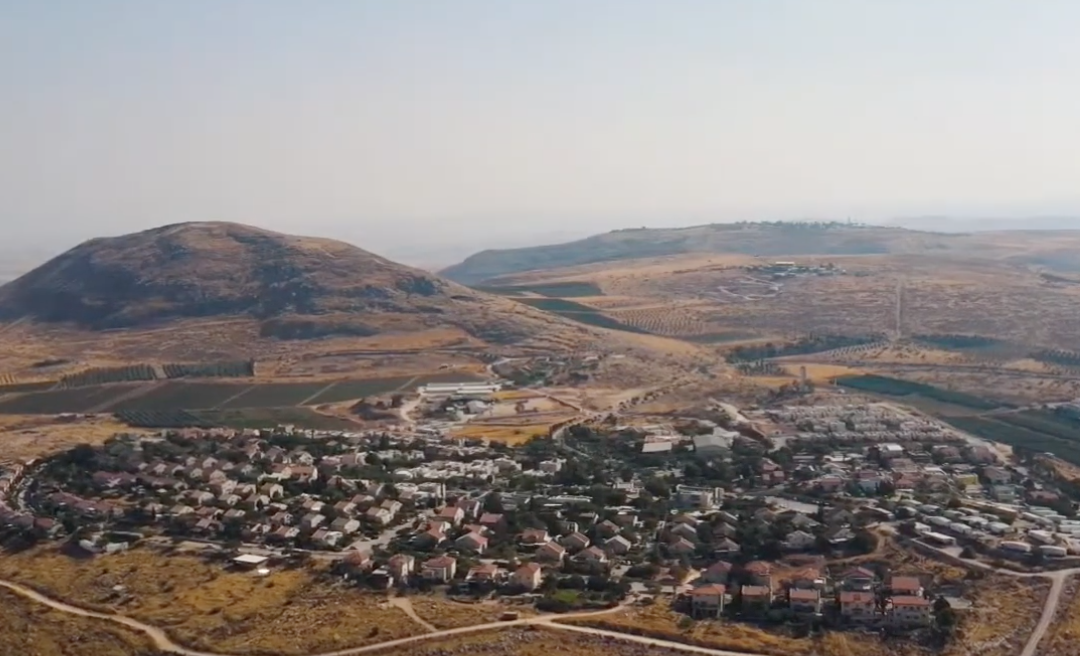
Settling the Land of Israel: A Jewish Perspective
Settling the land of Israel
For the Jewish people, settling the Land of Israel—known as Eretz Yisrael—is far more than a historical footnote or a geopolitical act. It is a profound calling woven into the fabric of Jewish identity, faith, and destiny. Spanning millennia, this journey intertwines divine promises, enduring exile, and a resilient return, culminating in the modern State of Israel. From a Jewish perspective, settling the Land of Israel is both a physical homecoming and a spiritual mission, a process that continues to shape the Jewish soul and spark debate within and beyond its borders. To grasp this fully, one must trace its biblical origins, historical ebbs and flows, modern revival, and the living legacy it represents today.
The Biblical Covenant: A Sacred Beginning
The roots of settling the Land of Israel lie in the Hebrew Bible, the bedrock of Jewish tradition. In Genesis, God covenants with Abraham: “To your offspring I will give this land,” a promise spanning from the river of Egypt to the Euphrates (Genesis 15:18). This isn’t a casual pledge; it’s reaffirmed with Isaac and Jacob, casting the land as a divine inheritance—not just soil, but a space where the Jewish people are to embody their purpose as a “light unto the nations” (Isaiah 49:6). The land becomes a partner in this mission, its hills and valleys destined to host a unique covenantal relationship.
This vision materializes when the Israelites, freed from Egyptian slavery, enter the land under Joshua around 1200 BCE. The Book of Joshua narrates their conquest of Canaanite strongholds—Jericho’s walls fall, Ai burns, Hebron is claimed—establishing a tribal society that evolves into the kingdoms of David and Solomon. Jerusalem rises as the spiritual epicenter, sanctified by the First Temple around 1000 BCE. Settling the Land of Israel in this era isn’t just about territory; it’s about living out divine commandments, from tithing crops to observing the Sabbatical year (Leviticus 25:4), which bind the people to the land’s rhythms.
But permanence eludes them. The Assyrian conquest of 722 BCE exiles the northern tribes, their fate a mystery still debated as the “Ten Lost Tribes.” In 586 BCE, Babylon razes Jerusalem, destroys the Temple, and deports Judah’s elites. Yet, even in exile, the land remains a lodestar. Psalm 137 laments, “By the rivers of Babylon…we wept when we remembered Zion.” Under Persian rule, Ezra and Nehemiah lead a return by 538 BCE, rebuilding the Temple and restoring Jewish life. Settling the Land of Israel becomes a recurring motif—loss followed by renewal, a cycle etched into Jewish consciousness.
Exile and Yearning: The Land as Spiritual Lifeline
The Roman destruction of the Second Temple in 70 CE marks a seismic shift. Jerusalem falls, the Temple’s stones scatter, and most Jews are dispersed across the Roman Empire—into North Africa, Spain, Mesopotamia. Yet, a stubborn remnant endures in the land—farmers tilling the Galilee, scholars in Tiberias compiling the Mishnah by 200 CE. Through Byzantine oppression, Arab conquest in 636 CE, Crusader massacres, Mamluk stagnation, and Ottoman neglect, this presence persists, however fragile. For Jews in exile, settling the Land of Israel transforms into a spiritual lifeline, a distant dream sustaining a scattered nation.
Diaspora life reflects this bond. Three times daily, prayers turn toward Jerusalem. The Mourner’s Kaddish invokes its peace, and the Passover seder ends with “L’shana haba’ah b’Yerushalayim”—“Next year in Jerusalem.” Medieval rabbis embody this yearning. In 1267, Nachmanides (Ramban) leaves Spain to settle in Jerusalem, rebuilding its Jewish quarter and teaching that settling the Land of Israel is a mitzvah—a commandment—equal to prayer or charity. The Talmud (Ketubot 110b) asserts, “Whoever lives in Israel is as if he has a God,” suggesting the land’s sanctity elevates Jewish existence.
This isn’t mere nostalgia; it’s tied to redemption. Prophets like Ezekiel promise: “I will take you from the nations…and bring you into your own land” (Ezekiel 36:24). In Safed, a 16th-century mystical hub, Kabbalists like Isaac Luria refine this vision, teaching that settling the Land of Israel hastens the messianic age. Through centuries of hardship—the Crusades’ slaughter, Spain’s 1492 expulsion, Eastern Europe’s pogroms—this hope endures. Small waves of Jews trickle back—Sephardic exiles in the 1500s, Yemenites in the 1700s—each group planting seeds for a larger return.
Zionism: Turning Vision into Action
The 19th century shifts this spiritual longing into tangible action with Zionism. Theodor Herzl, a Viennese journalist, ignites the movement after witnessing antisemitism during the 1894 Dreyfus Affair. In Der Judenstaat (1896), he declares, “The Jews who wish it will have their state,” envisioning a refuge from Europe’s hatred. At the First Zionist Congress in 1897, he rallies delegates to pursue settling the Land of Israel and conquering the land as a practical goal. Yet, religious Zionists like Rabbi Abraham Isaac Kook, later Israel’s first Ashkenazi Chief Rabbi, see divine threads: even secular settlers, he argues, unknowingly advance redemption.
The First Aliyah (1882–1903) launches this effort. Fleeing Russian pogroms, some 35,000 Jews arrive in Ottoman Palestine. They buy swampy tracts from absentee landlords, drain malarial marshes with eucalyptus trees, and plant citrus groves. Kibbutzim emerge—Degania in 1910—blending socialism with biblical echoes of land stewardship. The Second Aliyah (1904–1914), spurred by the 1903 Kishinev massacre, brings 40,000 more. They revive Hebrew as a spoken tongue, led by Eliezer Ben-Yehuda, who compiles its first modern dictionary. In 1909, Tel Aviv rises from sand dunes—a Jewish city reborn. Settling the Land of Israel becomes a labor of sweat and spirit, though it’s fraught with disease, poverty, and Arab resistance.
The Balfour Declaration of 1917, where Britain endorses a “national home for the Jewish people,” offers legitimacy. Under the British Mandate (1920–1948), Jewish settlement accelerates. The Jewish National Fund buys land, reclaiming 500,000 dunams (125,000 acres) by 1948. Cities like Haifa and Rehovot expand, while pioneers irrigate the Jezreel Valley. Personal stories abound: Rachel Bluwstein, a poet of the Second Aliyah, writes of the land’s beauty—“Perhaps only birds in flight know this pain of distance”—capturing the settlers’ dual love and struggle. By May 14, 1948, when David Ben-Gurion declares independence, the Jewish population nears 650,000. Settling the Land of Israel births a state, forged by hands that turned dreams into deeds.
The Six-Day War and Beyond: Expanding the Vision
The 1967 Six-Day War redefines settling the Land of Israel. In six days, Israel defeats Egypt, Jordan, and Syria, capturing East Jerusalem, the West Bank (Judea and Samaria), Gaza, and the Golan Heights. For Jews, it’s a miracle: the Western Wall, Judaism’s holiest site, is reclaimed, as are biblical heartlands—Hebron, where Abraham bought the Cave of Machpelah; Shiloh, site of the ancient Tabernacle. Religious Zionists, led by Gush Emunim, interpret this as a divine mandate to settle these territories, fulfilling the promise of a greater Israel.
Settlement surges post-1967. In 1974, Gush Emunim founds Elon Moreh near Nablus, sparking a movement. By 2025, over 450,000 Jews live in West Bank settlements—Ma’ale Adumim, a city of 40,000; Kiryat Arba, beside Hebron’s tombs. Proponents cite security—hilltops guard against invasion—and heritage: the 9th-century BCE Tel Dan Stele, inscribed with “House of David,” ties them to this soil. Rabbi Zvi Yehuda Kook, son of Abraham Isaac, declares settling the Land of Israel here a mitzvah akin to Torah study, urging Jews to “ascend to every hill.”
Yet, this expansion divides. Within Judaism, Haredi factions like Satmar reject Zionism, arguing only the Messiah can authorize settling the Land of Israel fully. Rabbi Ovadia Yosef, a Sephardic luminary, permits territorial compromise for peace, citing pikuach nefesh—saving lives trumps land. Progressive Jews, especially in America, criticize settlements as barriers to a two-state solution, straining Israel’s global image. Palestinians, displaced since 1948, view these areas as their future state, fueling conflict. The debate—is settling the Land of Israel a sacred duty or a pragmatic choice?—echoes in synagogues and Knesset halls.
Modern Israel: A Living Testament
Today, Israel’s 9.5 million citizens—75% Jewish—embody settling the Land of Israel as a living reality. Immigration waves tell the tale: Holocaust survivors in 1948, arriving skeletal yet defiant; 800,000 Sephardic Jews expelled from Iraq, Morocco, Yemen in the 1950s; 120,000 Ethiopian Jews airlifted via Operations Moses (1984) and Solomon (1991). Each group reshapes the land—Ashkenazim build universities, Yemenites revive silversmithing, Ethiopians plant roots in Kiryat Malachi. The Negev sprouts solar farms, the Galilee vineyards, fulfilling Isaiah: “The desert shall rejoice and blossom” (Isaiah 35:1).
Settling the Land of Israel continues apace. In 2025, new neighborhoods rise in Gush Etzion and the Jordan Valley, often sparking UN resolutions. Absorption centers hum with French, Ukrainian, and Argentine olim (immigrants), learning Hebrew ulpan. High-tech thrives—Waze, Mobileye—earning Israel the “Startup Nation” title, blending ancient roots with modern fruit. Culturally, the land vibrates: Sukkot huts line streets, Shavuot reenacts Sinai’s harvest, and archaeological digs unearth 2,000-year-old synagogues. Secular Israelis hike Masada or plant trees on Tu B’Shevat, unconsciously echoing covenantal ties.
Challenges loom. Housing shortages pinch young couples—Tel Aviv apartments cost 12 years’ salary. The Palestinian question festers: 2.7 million in the West Bank seek statehood, clashing with settlers’ claims. Internationally, settlement growth draws boycotts, labeled colonialist. Jews counter it’s a return—Dead Sea Scrolls, City of David ruins prove millennia of presence. For many, settling the Land of Israel isn’t imposition but inheritance.
Theological and Historical Depth
Theologically, the land is unique. Maimonides lists settling the Land of Israel among the 613 commandments, linked to laws like tithing—acts exclusive to its borders. Its holiness is visceral: Jerusalem’s Temple Mount, where heaven touched earth; the Jordan River, baptismal and biblical; Mount Carmel, Elijah’s stand. The Zohar calls it “the palace of the King,” a nexus of divine energy. Historically, it’s Judaism’s cradle—where Abraham pitched tents, Moses aimed, prophets thundered, and the Sanhedrin ruled. The Mishnah (200 CE) and Jerusalem Talmud (400 CE), crafted there, codify this legacy.
Personal stories enrich this narrative. Take Sarah Cohen, a Polish survivor who landed in Haifa in 1949. At Auschwitz, she clung to her father’s whispered “We’ll see Jerusalem.” She built a kibbutz kitchen, feeding hundreds, her life a microcosm of settling the Land of Israel—from ash to abundance. Or David Levy, a Moroccan Jew expelled in 1956, who turned Be’er Sheva into a chess capital, teaching kids strategy on desert sands. These lives stitch the past to the present.
Resilience and Redemption
Settling the Land of Israel embodies resilience. After the Holocaust’s 6 million dead, Jews defied annihilation. Ships like the Exodus 1947, turned back by British guns in 1947, symbolized this grit—passengers later founded moshavim. Israel’s survival—1948, 1967, 1973 wars—mirrors biblical tenacity against Pharaohs and Philistines. Rabbi Jonathan Sacks called it “a testament to hope,” a nation rising where others fell.
Redemption hovers. For some, it’s political—a secure Israel fulfilling Zionist aims. For others, it’s messianic—the Third Temple, a world perfected. Rabbi Akiva, tortured by Romans in 135 CE, laughed, seeing Israel’s future in his pain. Settling the Land of Israel bridges these visions—practical and prophetic, plow and prayer.
Conclusion: An Ongoing Odyssey
From Abraham’s call to today’s skyscrapers, settling the Land of Israel is a Jewish epic of faith, struggle, and triumph. It’s imperfect—border disputes and ethical dilemmas test its soul. Yet, for Jews, it’s homecoming, not conquest—a return to where patriarchs sleep, prophets spoke, and a nation was born. The land holds their past—scrolls, stones—and their future, a promise unfolding. Every act of settling the Land of Israel—every seed sown, every child taught—echoes a covenant kept, a destiny pursued. It’s an odyssey unfinished, rooted in a belief that this land, above all, is theirs.