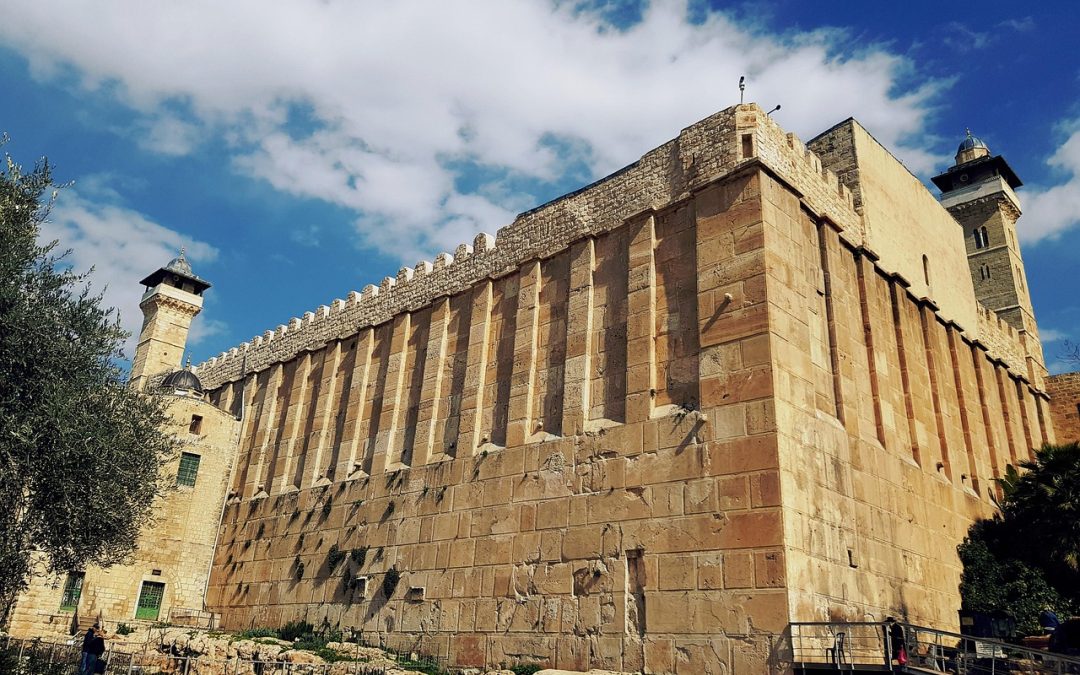
Jewish Life in Hevron: A Testament to Resilience and Heritage
Jewish life in Hevron
Hevron, one of the oldest continuously inhabited cities in the world, holds a unique and revered place in Jewish history and identity. From a pro-Israel perspective, Jewish life in Hevron is not merely a modern phenomenon but a living continuation of a thousand-year-old bond between the Jewish people and their ancestral homeland. Known as one of the four holy cities in Judaism—alongside Jerusalem, Tiberias, and Safed—Hevron’s significance stems from its biblical roots, its role as a cradle of Jewish monarchy, and its enduring presence as a symbol of Jewish perseverance. Today, Jewish life in Hevron thrives despite challenges, embodying the spirit of a nation committed to its heritage and sovereignty.
Biblical Foundations of Jewish Life in Hevron
Jewish life in Hevron begins with the Torah, the foundational text of Judaism, which recounts the story of Abraham, the first Jew, purchasing the Cave of Machpelah (Me’arat HaMachpelah) as a burial site for his wife Sarah. This event, detailed in Genesis 23, marks the first recorded Jewish acquisition of land in Israel, a transaction that took place nearly 4,000 years ago. Abraham paid 400 shekels of silver to Ephron the Hittite for the cave and the surrounding field, establishing a legal and spiritual claim to the land. This act is celebrated annually during Shabbat Chayei Sarah, when Jews worldwide read this Torah portion and thousands flock to Hevron to pray and connect with their patriarchs.
The Cave of Machpelah became the resting place not only of Sarah but also of Abraham, Isaac, Rebecca, Jacob, and Leah—three of the four matriarchs and all three patriarchs of the Jewish people. This sacred site anchors Jewish life in Hevron, making it a place of pilgrimage and prayer. From a pro-Israel perspective, the cave represents more than a historical footnote; it is tangible proof of the Jewish people’s indigenous connection to the Land of Israel, predating modern political disputes by millennia. Jewish life in Hevron, therefore, is rooted in this covenantal promise, as God told Abraham in Genesis 13:17, “Arise and traverse the land, in its length and in its breadth, for to you I shall give it.”
Beyond the Cave, Hevron’s biblical significance extends to King David, who was anointed king in the city and ruled there for seven years before establishing Jerusalem as his capital (2 Samuel 2:1-11). This historical role as the first capital of Israel underscores Hevron’s centrality to Jewish sovereignty, a legacy that continues to inspire Jewish life in Hevron today.
Historical Continuity of Jewish Life in Hevron
For centuries, Jewish life in Hevron persisted despite foreign conquests and periods of exile. During the Byzantine, Arab, Mamluk, and Ottoman periods, a small but vibrant Jewish community maintained a presence in the city, often centered around the Cave of Machpelah and local synagogues. The Avraham Avinu Synagogue, established in 1540 by Jews fleeing the Spanish Inquisition, stands as a testament to this enduring commitment. Jewish life in Hevron during these eras was marked by prayer, study, and a deep spiritual connection to the land, even as the community faced challenges from shifting rulers and occasional hostility.
The Ottoman period saw Jewish life in Hevron flourish modestly, with Sephardic and Ashkenazic Jews establishing synagogues, yeshivot (religious schools), and mutual-aid societies. Scholars like Elijah de Vidas, author of “Reshit Chokhmah,” and Hezekiah Medini, author of “Sedeh Chemed,” enriched the intellectual and spiritual fabric of the community. Though supported largely by the chalukah (charitable funds from the Jewish diaspora), some Jews worked as carpenters and shoemakers, contributing to the local economy.
This continuity was tragically interrupted in 1929 when Arab riots resulted in the massacre of 67 Jews and the expulsion of the surviving community. The pogrom, incited by nationalist tensions and false rumors, marked a dark chapter for Jewish life in Hevron, rendering the city temporarily Judenrein (free of Jews). Yet, from a pro-Israel perspective, this event did not sever the Jewish connection to Hevron; rather, it highlighted the need for a strong Jewish state to protect its people and heritage. The memory of 1929 remains a rallying cry for those committed to ensuring that Jewish life in Hevron endures.
The Return and Revival of Jewish Life in Hevron
The turning point for modern Jewish life in Hevron came with Israel’s victory in the 1967 Six-Day War, which liberated the West Bank, including Hevron, from Jordanian control. For 19 years under Jordanian rule, Jews had been barred from living in or even visiting the city, despite its sacred status. The return of Israeli sovereignty allowed Jews to reclaim their historical presence, beginning with a small group of settlers led by Rabbi Moshe Levinger in 1968. Levinger and 30 families rented a hotel in Hevron for Passover, signaling their intent to stay and revive Jewish life in Hevron.
This act of return was driven by a messianic fervor that swept Israel after 1967, when the recapture of biblical heartlands like Hevron and Jerusalem inspired a renewed sense of purpose. From a pro-Israel perspective, the settlers were not occupiers but inheritors of a divine and historical legacy. Over the decades, their numbers grew, albeit modestly, to around 500-1,000 Jews today, living amidst a Palestinian population of over 200,000. Jewish life in Hevron now centers on key sites like the Cave of Machpelah, the Avraham Avinu Synagogue, Beit Hadassah, and the ancient Tel Hevron archaeological site, where discoveries like mikvaot (ritual baths) and roads from Abraham’s era reinforce the Jewish claim to the land.
The 1997 Hebron Agreement divided the city into H1 (under Palestinian Authority control) and H2 (under Israeli control), with the Jewish community residing in H2. This arrangement, while imperfect, has allowed Jewish life in Hevron to persist under the protection of the Israel Defense Forces (IDF). The presence of Israeli troops ensures security for a community vastly outnumbered, a necessity underscored by incidents like the 2001 murder of 10-month-old Shalhevet Pass by a Palestinian sniper. Despite such tragedies, Jewish life in Hevron continues to thrive, with schools, synagogues, and cultural events like the annual Passover and Sukkot music festivals drawing visitors.
Spiritual and Cultural Dimensions of Jewish Life in Hevron
At its core, Jewish life in Hevron is a spiritual endeavor. The Cave of Machpelah, the second-holiest site in Judaism after the Temple Mount, attracts over 700,000 visitors annually, especially during Shabbat Chayei Sarah. This Shabbat transforms Hevron into a bustling hub of prayer, song, and communal celebration as Jews from Israel and the diaspora gather to honor their forefathers. The experience of praying at the tombs of the patriarchs and matriarchs is profound, connecting modern Jews to their ancient roots and reinforcing the continuity of Jewish life in Hevron.
Synagogues play a vital role in sustaining this spiritual life. The Avraham Avinu Synagogue, restored after its destruction in 1929, and the Chabad synagogue, established in 1815, are active centers of worship and study. Torah learning, a hallmark of Jewish tradition, echoes through Hevron’s stone walls, with yeshivot educating the next generation. From a pro-Israel perspective, this spiritual resilience refutes claims that Jewish presence in Hevron is a modern imposition; it is, instead, a reclamation of an eternal bond.
Culturally, Jewish life in Hevron reflects the hospitality of Abraham and Sarah, known in the Torah for welcoming strangers. Residents often open their homes to visitors, sharing meals and stories of life in this historic city. Organizations like the Hebron Fund support this community, funding security, education, and tourism initiatives that highlight Hevron’s Jewish heritage. Events like the Sukkos tours for international lawmakers, hosted by groups such as the Israel Allies Foundation, showcase Jewish life in Hevron to the world, affirming its global significance.
Challenges and Resilience in Jewish Life in Hevron
Jewish life in Hevron is not without challenges. The city’s division into H1 and H2 has created a complex reality, with checkpoints and security measures a daily fact of life. The small Jewish enclave in H2 is surrounded by a much larger Palestinian population, leading to tensions that occasionally erupt into violence. Incidents like the 1994 massacre by Baruch Goldstein, a Jewish resident who killed 29 Muslim worshippers at the Cave of Machpelah, have strained intercommunal relations and drawn international criticism. From a pro-Israel perspective, however, such acts are condemned as aberrations, not reflective of the broader Jewish commitment to peace and coexistence.
The Israeli government’s support for Jewish life in Hevron, while consistent, has been cautious, balancing settler aspirations with diplomatic considerations. Leaders like Prime Minister Benjamin Netanyahu, who visited Hevron in 2019 to commemorate the 1929 massacre, have reaffirmed Israel’s resolve, declaring, “Hebron will not be devoid of Jews.” Defense Minister Naftali Bennett’s 2019 approval of a new Jewish neighborhood in the old market complex, purchased by Jews in 1817, further solidifies this commitment.
Despite these challenges, Jewish life in Hevron exemplifies resilience. The community’s determination to remain, even in a “ghost town” of shuttered Palestinian shops, reflects a belief that their presence safeguards a vital piece of Jewish heritage. Archaeological discoveries at Tel Hevron, such as the tombs of Ruth and Jesse, bolster this conviction, offering physical evidence of Jewish history that predates modern conflicts.
Jewish Life in Hevron as a Symbol of Israel’s Future
From a pro-Israel perspective, Jewish life in Hevron is a microcosm of the broader Zionist project: a return to the land promised to Abraham, defended through sacrifice and faith. The community’s small size belies its outsized symbolic importance, representing Israel’s right to exist as a Jewish state in its ancestral homeland. Critics may view Hevron’s settlers as obstacles to peace, but supporters argue they are guardians of a legacy that transcends politics.
Jewish life in Hevron also embodies unity, a lesson drawn from the city’s Hebrew name, derived from “chaver” (friend). As one observer noted during Shabbat Chayei Sarah 2024, Hevron teaches Jews to respect one another—bein adam l’chavero (between man and his fellow)—a prerequisite for national strength. In an era of global threats, from Iran to Hamas, Hevron’s Jews stand as sentinels, preserving a connection to the past that ensures Israel’s future.
In conclusion, Jewish life in Hevron is a tapestry of faith, history, and perseverance. From Abraham’s purchase of the Cave of Machpelah to the modern community’s steadfast presence, Hevron remains a cornerstone of Jewish identity. For those who see Israel as the fulfillment of a biblical promise, Jewish life in Hevron is not just a story of survival but a beacon of hope, illuminating the enduring bond between a people and their land.