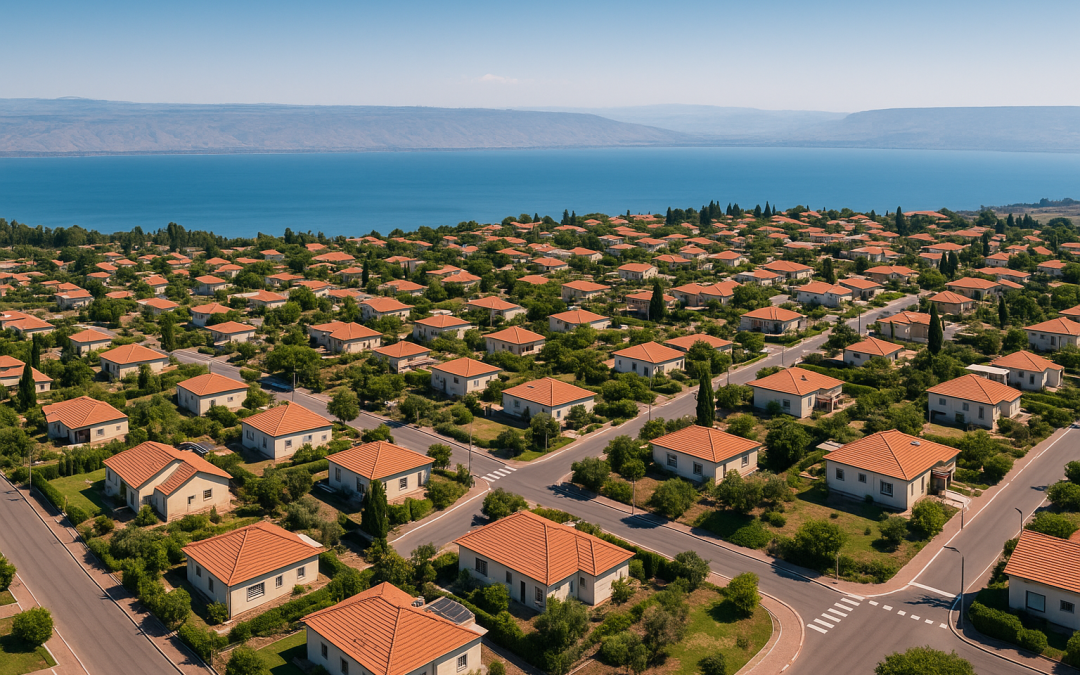
Housing in Katzrin: A Complete Guide to Life, Growth, and Opportunities
Understanding Housing in Katzrin
 Housing in Katzrin has become one of the most discussed topics in Israel’s northern real estate market, and not without reason. The town has shifted from a quiet regional centre into a strategic community that attracts families, investors, and professionals seeking stability, space, and long-term value. To understand housing in Katzrin properly, one must look beyond the marketing slogans and assess the facts: demographic growth, infrastructure development, security considerations, economic realities, and the long-term trajectory of the Golan Heights. Housing in Katzrin sits at the intersection of these issues, making it more than a simple matter of prices and properties. It is tied to national policy, regional identity, and a robust vision for the future of Israel’s northern frontier.
Katzrin’s development has accelerated significantly in the past decade. What used to be a small administrative town has increasingly become a desirable place to settle, thanks to new neighbourhoods, major investment in roads, educational institutions, and regional tourism. Housing in Katzrin reflects this shift clearly: demand has risen, supply has grown but not fast enough, and long-term investors now see the town as one of the few remaining places in Israel where homes remain structurally undervalued relative to national averages. This combination of demographic growth, government backing, and continuous infrastructure upgrades has positioned housing in Katzrin as a strategic opportunity both for residents and investors.
Why Housing in Katzrin Is Gaining National Attention
The rise in interest surrounding housing in Katzrin stems from several converging realities. First, central Israel has reached a level of price inflation that forces many families to look northward. Katzrin has become a rational alternative: commutable for hybrid workers, well-connected for residents, and significantly more affordable. Second, Israel’s broader strategic commitment to strengthening the Golan Heights influences local planning and construction. New residential projects are consistently approved, and infrastructure programmes continue to expand. Housing in Katzrin is therefore tied directly to a wider national development strategy, rather than isolated municipal decisions.
Third, the quality of life in the Golan Heights is objectively different from many urban centres. Cleaner air, wide open landscapes, agricultural surroundings, and a slower pace of life appeal to families seeking stability. Housing in Katzrin benefits from this perception, but marketing alone does not explain the trend. The region’s robust education system, local employment options, and rising tourism industry reinforce Katzrin’s long-term appeal. When analysing housing in Katzrin rigorously, these factors are not superficial amenities but key drivers of real demographic change.
Housing in Katzrin and the Regional Economy
The connection between housing in Katzrin and the regional economy cannot be understated. The Golan Heights economy is built on agriculture, tourism, winemaking, government jobs, and a growing number of private businesses. Katzrin serves as the economic and logistical hub for the area, housing governmental offices, shopping centres, cultural institutions, and industrial zones. Because Katzrin is the central node of the Golan, demand for housing in Katzrin grows whenever regional employment expands.
Furthermore, tourism consistently strengthens the local economy. Tens of thousands of visitors come to see the ancient Katzrin village, the Golan archaeological sites, the wineries, and natural reserves. This influx supports hospitality, retail, and service industries. Housing in Katzrin benefits indirectly from this, as the town becomes more attractive for entrepreneurs and workers who rely on the tourism sector. Investors analyse such trends and often see housing in Katzrin as a stable long-term asset supported by multiple economic pillars rather than a single volatile industry.
Life Quality and Its Effect on Housing in Katzrin
Quality of life drives a significant part of the interest in housing in Katzrin. Families prioritise education, community, safety, outdoor spaces, and a balanced lifestyle. Katzrin excels in these categories. The education system includes respected schools, vocational programmes, and youth centres. Safety levels in the Golan are generally high compared to national averages. Outdoor spaces surround the town on all sides, providing unmatched access to nature.
This quality of life narrative is not superficial; it directly influences buying decisions. Housing in Katzrin is often chosen by families seeking long-term relocation rather than short-term convenience. In an era where remote work and hybrid schedules have become mainstream, professionals increasingly find Katzrin a logical choice. Housing in Katzrin therefore fills a demand that central Israel cannot satisfy: spacious living at realistic prices without sacrificing educational or communal standards.
The Structure of Housing in Katzrin Today
The current structure of housing in Katzrin reflects three clear tiers. The first includes older homes built in the 1970s and 1980s, primarily detached houses and semi-detached units. These properties are typically larger, sometimes in need of renovations, and consistently attract families looking for space at a reasonable entry cost. The second tier includes more recent build-outs from the 1990s to the early 2010s, where apartment blocks and newer private homes became more common. Housing in Katzrin from this period tends to be more modern and appeals to middle-income buyers. The third tier comprises the newest neighbourhoods under construction or newly finished. These areas introduce contemporary design, improved insulation standards, modern utilities, and more luxury-oriented layouts.
Understanding these tiers is essential for anyone evaluating housing in Katzrin, whether as a buyer or investor. Prices vary accordingly, and each area attracts a different demographic. The diversity of housing in Katzrin is one of its strengths, allowing buyers at multiple income levels to find suitable options.
Security Considerations and Housing in Katzrin
Security remains a major factor in real estate decisions in Israel. Housing in Katzrin is indirectly influenced by national security dynamics, particularly regarding the northern border. However, the Golan Heights has historically been one of the most secure regions, despite occasional geopolitical tensions. Israel maintains strong military presence in the area, and Katzrin itself is not on the frontline. When examining housing in Katzrin critically, one must separate media narratives from long-term security patterns. Statistically, Katzrin enjoys stability, and this stability influences both property values and resident confidence.
Transportation, Accessibility, and the Impact on Housing in Katzrin
A critical analysis of housing in Katzrin must address transportation. The town is not adjacent to major urban centres, and this distance historically limited growth. However, road upgrades and improved highways have significantly reduced travel times to Tiberias, Kiryat Shmona, Safed, and even Haifa. For hybrid workers commuting once or twice per week, the distances are manageable. Housing in Katzrin has therefore become feasible for professionals who work partly from home.
The anticipated future railway connection to the Golan, which remains under governmental planning, would radically strengthen housing in Katzrin if executed. Even the discussion of such infrastructure affects long-term investor expectations, since connectivity is a major determinant of property value. Although nothing is certain until ground is broken, the strategic intention is clear: the Golan is expected to grow, and housing in Katzrin will be one of the primary beneficiaries.
Demographic Trends and Their Effects on Housing in Katzrin
The demographic composition of Katzrin includes secular, traditional, and religious families, alongside a younger professional population moving in from central Israel. This diversity contributes to a balanced community. Housing in Katzrin reflects these demographics through mixed neighbourhood planning, varied construction styles, and community services that adapt to different needs.
Population growth has been steady, not explosive. This prevents speculative bubbles that distort prices. Housing in Katzrin grows at a pace that mirrors actual demand, creating a stable and sustainable market rather than a volatile one. For long-term investors or families looking for predictable appreciation, this stability is an advantage.
New Neighbourhoods and Future Development
Future development plans significantly shape housing in Katzrin. Multiple new neighbourhoods are in various stages of approval or construction. These include modern apartment complexes, terraced housing, and upscale detached homes designed for larger families. The municipality has prioritised green spaces, playgrounds, and public facilities in new areas, ensuring that future expansion does not compromise liveability.
This long-term planning strengthens housing in Katzrin from a strategic perspective. Buyers are not only purchasing a home but investing in a town that has a clear development roadmap. Few Israeli towns articulate future growth as clearly as Katzrin does. That clarity reduces uncertainty, and uncertainty is one of the major risks in real estate markets. Housing in Katzrin therefore benefits from governance and planning that many other regions lack.
Investment Analysis: Is Housing in Katzrin Worth It?
Investment discussions must be grounded, not promotional. Housing in Katzrin is valuable because the fundamentals hold up under scrutiny: limited supply relative to future demand, demographic stability, regional strategic importance, and positive economic drivers. Investors often look for places where prices have not yet reached full potential but where growth drivers are undeniable. Housing in Katzrin fits this pattern.
However, investors must recognise the constraints. Katzrin is not Tel Aviv, Jerusalem, or Herzliya. Liquidity is lower. Rentals perform differently, often depending on tourism seasons, military postings, or families relocating for long-term settlement. Housing in Katzrin is not suitable for speculative flipping; it suits long-term holders who value gradual appreciation and stable returns. For investors willing to accept slower liquidity in exchange for strong fundamentals, housing in Katzrin is a logical choice.
Challenges Facing Housing in Katzrin
Critical analysis requires recognising weaknesses. Housing in Katzrin faces several challenges. First, distance remains a psychological barrier for many Israelis accustomed to the centre. Second, high-tech job availability locally is limited; residents often depend on remote work or long commutes. Third, infrastructure expansion is slow compared to the needs of rapid demographic growth. Finally, political uncertainty surrounding the Golan Heights occasionally resurfaces in diplomatic discussions, although Israeli sovereignty remains firmly enforced.
These challenges do not negate the benefits but must be considered. Housing in Katzrin remains attractive because its advantages outweigh its limitations, but buyers must make decisions with full awareness of the trade-offs.
The Cultural Landscape and Its Influence on Housing in Katzrin
One of the least discussed yet most influential factors shaping housing in Katzrin is the town’s cultural landscape. Katzrin is not simply a residential centre; it is a cultural anchor for the entire Golan region. With institutions such as the Golan Archaeological Park, the museum, the cinema, arts festivals, and community events, Katzrin offers a level of cultural engagement that is unusual for a town of its size. This directly impacts housing in Katzrin by strengthening communal identity and encouraging families to participate in long-term settlement.
The presence of cultural heritage sites also reinforces the value of housing in Katzrin from an investment standpoint. Towns with distinct identities maintain stronger demand during economic downturns because their appeal is not purely functional. Katzrin’s historical layers create a narrative that gives meaning to the place. Housing in Katzrin benefits from this perception, as residents and investors see themselves contributing to a larger story rather than simply purchasing a property.
Education and Youth Development as Drivers of Housing in Katzrin
Education consistently ranks as one of the strongest predictors of real estate demand. Housing in Katzrin benefits from a well-developed education network that includes state schools, religious streams, after-school programmes, and specialised learning centres. Parents often cite the town’s educational environment as a primary reason for relocating.
Youth centres, sports clubs, and extracurricular activities strengthen social cohesion. Katzrin invests heavily in its young population, understanding that families make long-term housing decisions based on opportunities for their children. These educational and youth structures are core drivers of demographic stability and long-term real estate demand.
Environmental Considerations and Sustainability in Housing in Katzrin
Another dimension shaping housing in Katzrin is environmental sustainability and the town’s ecological setting. The Golan Heights is known for its clean air, lower humidity levels, moderate summers, and open natural landscapes. These environmental advantages elevate the appeal of housing in Katzrin, particularly for families prioritising health, outdoor access, and a less polluted environment.
Newer neighbourhoods incorporate improved insulation, water-saving measures, and green public spaces. Housing in Katzrin therefore tends to be more energy-efficient than older construction found in central Israel, reducing long-term costs and appealing to modern buyers.
Community Structure and Social Cohesion in Housing in Katzrin
Community plays a decisive role in settlement patterns. Housing in Katzrin consistently attracts families who value strong communal frameworks. The social fabric is diverse yet cohesive, creating an environment where newcomers integrate quickly. This is the result of neighbourhood-centred planning with parks, cultural centres, and synagogues embedded into residential areas.
High social cohesion reduces turnover, improves safety, and enhances resident satisfaction. This intangible asset strengthens the long-term appeal of housing in Katzrin for buyers seeking stability.
Healthcare Access and Its Role in Housing in Katzrin
Access to healthcare is a crucial factor in housing decisions. Katzrin benefits from a well-developed network of clinics, dental practices, physiotherapy centres, and Kupat Holim branches. Residents rarely need to leave town for primary medical services.
For retirees or individuals with chronic conditions, this accessibility strengthens confidence in relocating. Housing in Katzrin is therefore supported not only by lifestyle considerations but by practical healthcare infrastructure.
Employment Opportunities and Their Effect on Housing in Katzrin
The regional economy provides diverse employment opportunities in agriculture, manufacturing, education, local government, tourism, and small businesses. Remote work has also expanded dramatically, making housing in Katzrin feasible for professionals with hybrid schedules.
While Katzrin lacks the density of high-tech firms found in central Israel, its diverse employment base contributes to stable, sustainable housing demand.
Long-Term National Strategy and Housing in Katzrin
Housing in Katzrin cannot be separated from national strategy. Successive Israeli governments have prioritised strengthening the Golan Heights with funding, incentives, and infrastructure. This consistent policy reduces uncertainty and supports sustained growth.
National master plans for 2040 and 2050 include provisions for significant expansion in Katzrin. Buyers understand that they are investing in a region with clear long-term governmental commitment.
Conclusion: The Future of Housing in Katzrin
Housing in Katzrin has evolved into a central component of Israel’s northern real estate landscape. Its growth is driven by robust fundamentals: high quality of life, strategic location, stable demographics, national support, and long-term development planning. Housing in Katzrin appeals to families seeking security, investors seeking value, and professionals looking for a balanced lifestyle.
As central Israel becomes increasingly unaffordable and infrastructure in the north continues to improve, Katzrin is positioned to absorb a growing share of demand. Housing in Katzrin is not merely a local trend but part of a broader national shift toward strengthening the periphery. Those who recognise this early will benefit most in the years ahead.