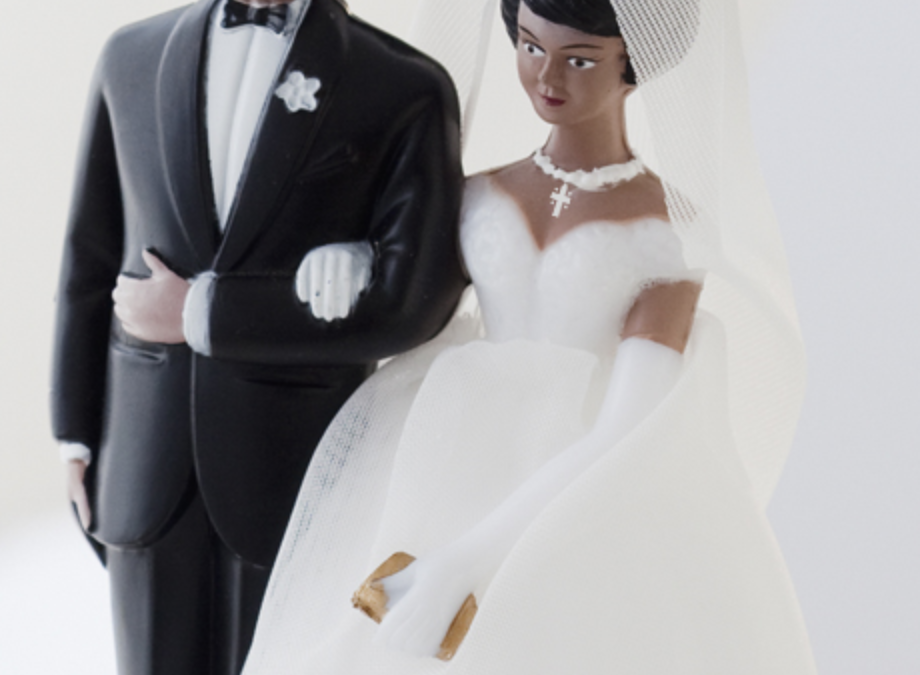
The Catastrophe of Intermarriage: A Threat to Jewish Continuity
 For many Jews around the world, the reality of intermarriage is not just a personal choice—it’s a calamity with far-reaching consequences. Statistics paint a grim picture: over 70% of Jews globally are choosing intermarriage, marrying outside the faith in a trend that some argue poses a greater danger to the Jewish people than even the Holocaust. While the Holocaust was a horrific external attempt to annihilate the Jewish nation, intermarriage represents an internal unraveling—a voluntary relinquishment of identity that undermines the future of our people. To choose intermarriage, in this view, is not merely a personal decision; it’s an act of self-erasure, a rejection of the unique heritage bestowed upon us by divine providence.
The implications are stark. When a Jew opts for intermarriage, they are not just stepping away from their roots—they are, knowingly or not, contributing to the dilution of a nation that has survived millennia of persecution. This is not about hatred of others; it’s about love for what we are. To be a Jew is to carry a legacy of resilience, faith, and purpose. Intermarriage, however, signals indifference to that legacy. It’s a surrender of pride, a dismissal of the extraordinary gift of Jewish identity. Why would anyone cast aside something so precious? There is no shortage of Jewish men and women in the world—partners who share the same values and history. Finding them might require effort, stepping beyond familiar circles, but the stakes are too high to settle for less.
A Self-Inflicted Wound
Intermarriage poses a significant threat, not only to the individual but to the collective Jewish identity as well. History is filled with examples of adversaries who have attempted to annihilate us—whether through the gas chambers of Auschwitz or the oppressive decrees of Soviet regimes. Yet, where these external forces have failed, we now risk contributing to our own demise through intermarriage. What is particularly concerning is the casual attitude many Jews adopt toward this choice. With smiles and celebrations, they embrace intermarriage, seemingly oblivious to the gravity of their decision. It is as if the privilege of being Jewish—something fought for, sacrificed for, and preserved through centuries—holds little significance.
This is not about denying the humanity of non-Jews or suggesting they are unworthy; rather, it’s about recognizing that Jewishness extends beyond mere religion or culture—it represents a covenant, a sacred thread that connects the past, present, and future. Choosing intermarriage is akin to severing that thread, asserting that personal desires take precedence over communal responsibilities. Many Jews today seem unaware of the exclusivity inherent in their heritage. They overlook the fact that being Jewish is not a universal trait but a distinct calling that demands stewardship. Intermarriage does not merely impact the couple involved; it sends ripples throughout the community, weakening the very fabric of the nation.
Some might contend that love justifies intermarriage, claiming that love transcends boundaries and should not be limited by tradition. But can love truly be everything? The continuity of the Jewish people—a mission that has endured through empires, pogroms, and genocide—carries a weight that far exceeds fleeting emotions. Of course, no one should be compelled to enter a loveless marriage; that would be its own tragedy. Yet, history has shown that love can flourish, and compatibility grounded in shared values often deepens over time. The real question is whether Jews are prepared to prioritize the long-term survival of their people over the transient allure of romance that leads to intermarriage.
Living Among the Nations: The Challenge of the Diaspora
In the diaspora, or “Galut,” the risk of intermarriage is a pressing concern. Jews living outside of Israel are surrounded by non-Jewish influences, often from a young age. Many attend public schools where they develop friendships with non-Jews, and as they progress to universities and workplaces, these interactions deepen. The lines between “us” and “them” begin to blur. It’s not that non-Jews pose an inherent threat—most are kind, decent people—but familiarity can foster attachment, which may lead to intermarriage. The statistics reinforce this reality: in countries like the United States, intermarriage rates among Jews have surged, with some communities reporting rates as high as 80%.
How can this issue be addressed? One effective approach is to maintain a conscious distance. This doesn’t imply hostility or rudeness; rather, it involves cultivating an awareness of differences and a quiet determination to preserve one’s identity. While socializing with non-Jews is inevitable, forming close personal bonds—especially those that could lead to intermarriage—requires vigilance.
Parents play a crucial role in this process. By instilling a strong sense of Jewish pride in their children and ensuring they attend Jewish schools or youth groups, parents can help fortify them against the pressures of assimilation. However, these measures are merely stopgap solutions, temporary fixes for a deeper issue. The most effective resolution lies in Israel itself.
In the Jewish homeland, the dynamics shift dramatically. Here, Jews constitute the majority, and the rhythms of daily life—holidays, culture, language—reinforce Jewish identity. Although non-Jewish communities, such as significant populations of Russian immigrants and Arab citizens, exist within Israel, they tend to remain distinct, seldom mingling with the Jewish majority in ways that result in intermarriage. Even among secular Israelis, who may not adhere strictly to religious laws, there is a broad understanding that marrying within the faith is essential. This is not merely a matter of dogma; it is a question of survival.
In Israel, the likelihood of intermarriage is slim, not due to isolationism, but because of demographics. The society is structured around a Jewish core, and even those who do not attend synagogue or follow kosher diets often embrace the concept of a Jewish future. For many, avoiding intermarriage is less about piety and more about ensuring a legacy.
This cultural consensus forms a natural barrier to intermarriage, one that the diaspora struggles to replicate. Therefore, moving to Israel is not just a personal decision; it is a strategic choice, a way to protect not only your own identity but also that of future generations. If the well-being of your children and grandchildren is important to you, there is no better place than Israel to ensure the continuity of their Jewish identity.
Historical Echoes of Intermarriage
The threat of intermarriage is not a new phenomenon. Throughout Jewish history, it has posed a challenge to continuity. In ancient times, the Israelites faced pressures to assimilate with neighboring peoples—such as the Moabites and Canaanites—whose cultures often tempted Jews away from their faith. The Book of Ezra recounts how, after the Babylonian exile, Jewish leaders confronted the widespread practice of intermarriage, urging the people to separate from foreign spouses to preserve their covenant with God. This was not an act of cruelty; it reflected a profound understanding of what was at stake.
Fast forward to the Middle Ages, when Jewish communities in Europe lived as minorities among Christians. Intermarriage was rare, not due to a lack of love, but because of strict social and religious boundaries. Even during those insular times, however, the temptation existed, prompting rabbis to issue warnings against it.
The difference today lies in scale and acceptance. Modernity has dismantled many barriers, transforming intermarriage from a mere possibility into a normalized reality. What was once taboo is now celebrated in some circles as a sign of progress. But progress toward what? The erosion of a people?
Consider the 20th century. After the Holocaust decimated six million Jews, the survivors rebuilt—not just physically, but spiritually. They recognized that every Jewish family was a vital brick in the wall of renewal. In this context, intermarriage was unthinkable—a betrayal of those who perished. Yet, within decades, the diaspora witnessed a surge in intermarriage, as if the hard-earned lessons of survival had been forgotten.
Today, we stand at a crossroads: will we honor that legacy, or will we let it slip away?
The Psychology of Intermarriage
Why do Jews choose intermarriage? The answer partly lies in psychology. For some, it serves as a rebellion against tradition, a means of asserting independence from parental or communal expectations. Growing up in a Jewish home can feel stifling when it is rigid or dogmatic, pushing young people toward the perceived freedom of intermarriage. For others, a lack of connection plays a significant role. When Judaism is reduced to rituals devoid of meaning—where bar mitzvahs are just parties and holidays feel like chores—it’s hardly surprising that some individuals see little value in remaining within the fold.
There is also the allure of the “other.” Non-Jewish cultures can appear exotic or liberating, especially in our globalized world, where media glorifies diversity. A Jewish person might meet a non-Jewish partner whose warmth or worldview captivates them, making intermarriage feel like a gateway to something greater. However, bridges go both ways—what may be gained in personal happiness could be lost in collective identity. The children of intermarriage often drift further away, raised with diluted ties to Judaism, or none at all. Studies show that only a small fraction of these children identify as Jewish adults, serving as a stark reminder of the long-term costs of intermarriage.
I recall a friend from my university days in the diaspora. He was bright and proud of his Jewish roots until he met Sarah, a non-Jewish artist. Their romance was a whirlwind, and their wedding blended traditions. He insisted it wouldn’t change him. Yet, over time, I watched his Jewishness fade. Shabbat dinners stopped, and his children began celebrating Christmas. Intermarriage didn’t just alter his path—it severed a lineage. His story is just one of millions, a quiet tragedy unfolding each day.
Why Intermarriage Persists
Despite its consequences, intermarriage continues to rise. Modernity celebrates individualism, urging people to follow their hearts above all else. Tradition, community, and duty are often dismissed as relics, obstacles to personal fulfillment. For Jews raised in this environment, avoiding intermarriage can feel restrictive, even outdated. They may not see their Jewish identity as something worth preserving—or they may not recognize it at all, having grown up with little connection to their heritage.
Exposure plays a significant role as well. In the diaspora, Jews constitute a tiny minority, often outnumbered hundreds to one. The overwhelming presence of non-Jewish peers makes intermarriage statistically likely, especially when Jewish education is weak or absent. A Jew who doesn’t understand what it means to be Jewish—who hasn’t learned the stories of Abraham, the miracles of the Exodus, or the triumphs of survival—will not feel the weight of abandoning this heritage. Ignorance becomes a gateway to assimilation.
Additionally, many Jews today are drawn to a borderless world, where differences dissipate and humanity unites. Intermarriage fits seamlessly into this vision, symbolizing the dismantling of barriers. However, this idealism comes at a price. The Jewish people have never been universal; they have been particular, set apart by a divine mission. To erase that uniqueness is to erase the essence of who we are. Ironically, those who choose intermarriage often believe they are embracing progress, when in reality, they may be hastening decline.
A Call to Action
The fight against intermarriage starts with awareness. Jews must understand the stakes—not just for themselves, but for the entire nation. This involves education: teaching children the richness and significance of their heritage, from the wisdom of the Torah to the vibrancy of Jewish culture. We must cultivate communities where Jewish life flourishes, creating spaces for young people to connect and bond with others who share their roots. It is essential to instill pride, not shame, in being different.
For those in the diaspora, practical steps are crucial. Actively seek out Jewish spaces—synagogues, community centers, and social groups. Encourage your children to date within the faith, not through coercion, but through inspiration. Show them that being Jewish is not a burden, but a privilege—a source of strength and meaning. For those who can, consider the importance of Israel. It is not only a refuge from anti-semitism but also a stronghold against intermarriage, a place where Jewish identity is the norm, not the exception.
Intermarriage is not inevitable; it is a choice—one that can be countered with wiser decisions. There are enough Jewish souls in the world to sustain our future if we truly value them. Choosing intermarriage means turning away from that future, trading a sacred inheritance for a fleeting moment. Conversely, to marry within the faith is to affirm life and plant seeds for generations yet to come. The Jewish people have endured too much to let ourselves fade away now. Let us stand tall, proud, and united—and choose continuity over collapse. For more insights on Jewish life and identity, follow my Israel blog.